
A bullet of mass 5 g, traveling with a speed of 210 m/s, strikes a fixed wooden target. One half of its kinetic energy is converted into heat in the bullet while the other half is converted into heat in the wood. The rise of temperature of the bullet if the specific heat of its material is 0.030cal/(g- °C)(1cal = 4.2 * 10⁷ergs) close to:
A bullet of mass 5 g, traveling with a speed of 210 m/s, strikes a fixed wooden target. One half of its kinetic energy is converted into heat in the bullet while the other half is converted into heat in the wood. The rise of temperature of the bullet if the specific heat of its material is 0.030cal/(g- °C)(1cal = 4.2 * 10⁷ergs) close to:
1/4 m (210)² = m (0.03) x (4.2) x 1000 x ΔT ; Q = mSΔt
ΔT = (210) (210)/ (4) (4.2) (0.03) (1000) = 87.5°C
 Upvote
Similar Questions for you
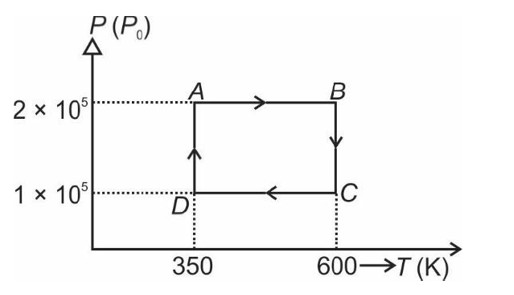
From A to B the process is isobaric
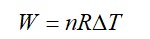
= W = 2 × R (600 - 350)
= 500 R

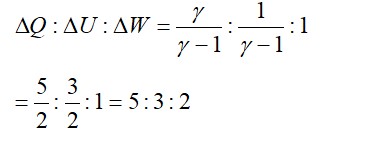
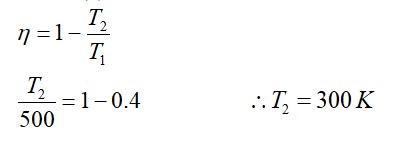

Heat is path dependent so path function but internal energy does not depend on path chosen.
Taking an Exam? Selecting a College?
Get authentic answers from experts, students and alumni that you won't find anywhere else.
On Shiksha, get access to
Learn more about...

Didn't find the answer you were looking for?
Search from Shiksha's 1 lakh+ Topics
Ask Current Students, Alumni & our Experts
Have a question related to your career & education?
See what others like you are asking & answering