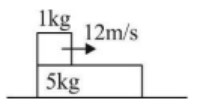
A plank of mass 5 kg in kept on a smooth surface. A block of 1 kg is kept on it and is given a velcoity of 12 m/s. There is friction between the block and the plank. Assuming the plank to be very long, find the magnitude of work done (in Joules) by friction on block till the relative sliding between them stops.
When relative sliding stops, both move with same velocity.
Only friction acts in horizontal direction.
∴ for system no external force, we can apply conservation of momentum.
1 * 12 + 5 * 0 = 6 * v
v = 2 m/s
Now work done by friction on block = change in kinetic energy of block
w = (1/2)m (2² - 12²) = (1/2
Similar Questions for you
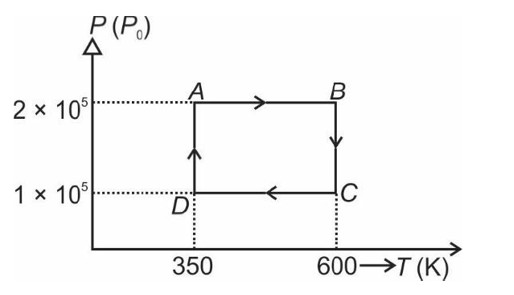
From A to B the process is isobaric

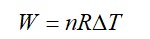
= W = 2 × R (600 - 350)
= 500 R
Taking an Exam? Selecting a College?
Get authentic answers from experts, students and alumni that you won't find anywhere else.
On Shiksha, get access to
Learn more about...

Physics Work, Energy and Power 2021
View Exam DetailsMost viewed information
SummaryDidn't find the answer you were looking for?
Search from Shiksha's 1 lakh+ Topics
Ask Current Students, Alumni & our Experts
Have a question related to your career & education?
See what others like you are asking & answering