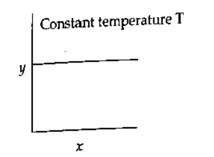
The given graph is a representation of kinetics of a reaction.

The y and x axes respectively are for zero and first order reactions, respectively are:

Option 1 - <p>Zero order ( y = concentration and x = time), first order ( y = t₁/₂ and x = concentration)<br>&lt;!-- [if !supportLineBreakNewLine]--&gt;<br>&lt;!--[endif]--&gt;</p>
Option 2 - <p>Zero order ( y = concentration and x = time), first order ( y = rate constant and x = concentration)<br>&lt;!-- [if !supportLineBreakNewLine]--&gt;<br>&lt;!--[endif]--&gt;</p>
Option 3 - <p>Zero order ( y = rate and x = concentration ), first order (y = t₁/₂ and x = concentration)<br>&lt;!-- [if !supportLineBreakNewLine]--&gt;<br>&lt;!--[endif]--&gt;</p>
Option 4 - <p>Zero order (y = rate and x = concentration ), first order (y = rate and y = t₁/₂)</p>
3 Views|Posted 5 months ago
Asked by Shiksha User
1 Answer
V
5 months ago
Correct Option - 3
Detailed Solution:

For a zero-order reaction Rate Vs conc graph will be straight line parallel to the x-axis.
For a 1st order reaction t? /? vs concentration will again be a straight line parallel to x-axis.

Thumbs Up IconUpvote Thumbs Down Icon

Similar Questions for you

ΔG° = –RT * 2.303 log K

–nFE° = +RT * 2.303 log K

2 * 96500 * 0.295 = 8.314 * 298 * 2.303 log10 K

10 = log10 K = 1010

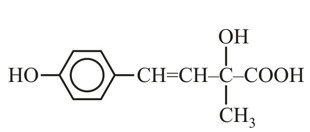
It has chiral centre and differently di substituted double bonded carbon atoms.

Taking an Exam? Selecting a College?

Get authentic answers from experts, students and alumni that you won't find anywhere else.

On Shiksha, get access to

66K
Colleges
|
1.2K
Exams
|
6.9L
Reviews
|
1.8M
Answers

Learn more about...

Chemistry Chemical Kinetics 2025

Chemistry Chemical Kinetics 2025

View Exam Details

Most viewed information

Summary

Share Your College Life Experience

Didn't find the answer you were looking for?

Search from Shiksha's 1 lakh+ Topics

or

Ask Current Students, Alumni & our Experts

Have a question related to your career & education?

or

See what others like you are asking & answering