
Given below are two statements.
Statement I: O2, Cu2+, and Fe3+ are weakly attracted by magnetic field and are magnetized in the same direction as magnetic field.
Statement II: NaCl and H2O are weakly magnetized in opposite direction to magnetic field.
In the light of the above statements, choose the most appropriate answer from the options given below.
Given below are two statements.
Statement I: O2, Cu2+, and Fe3+ are weakly attracted by magnetic field and are magnetized in the same direction as magnetic field.
Statement II: NaCl and H2O are weakly magnetized in opposite direction to magnetic field.
In the light of the above statements, choose the most appropriate answer from the options given below.
are paramagnetic
Weakly attracted by magnetic field
NaCl and H2O are diamagnetic
Weakly repelled by magnetic field.
 Upvote
Similar Questions for you
ΔG° = –RT * 2.303 log K
–nFE° = +RT * 2.303 log K
2 * 96500 * 0.295 = 8.314 * 298 * 2.303 log10 K
10 = log10 K = 1010
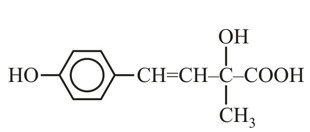
It has chiral centre and differently di substituted double bonded carbon atoms.
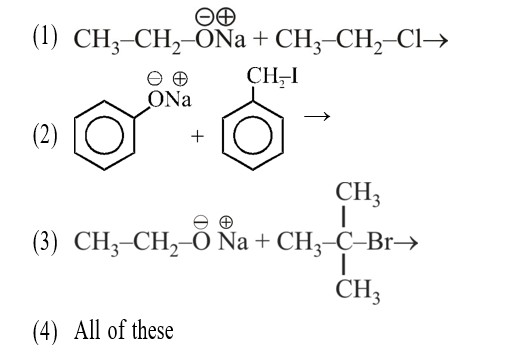
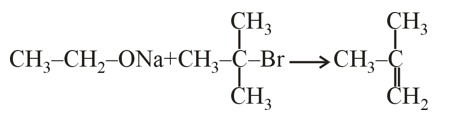
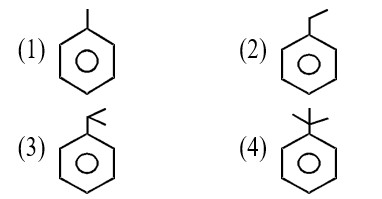
Rate of ESR ∝ No. of α – H (Hyperconjugation)
Cr3+ion is a most stable in aqueous solution due to. t2g half filled configuration
Taking an Exam? Selecting a College?
Get authentic answers from experts, students and alumni that you won't find anywhere else.
On Shiksha, get access to
Learn more about...

NCERT Class 12 Chemistry 2025
View Exam DetailsMost viewed information
SummaryDidn't find the answer you were looking for?
Search from Shiksha's 1 lakh+ Topics
Ask Current Students, Alumni & our Experts
Have a question related to your career & education?
See what others like you are asking & answering