
The correct order of stability for the following alkoxides is
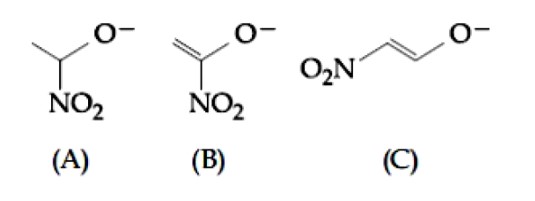
The correct order of stability for the following alkoxides is
Option 1 - <p><span class="mathml" contenteditable="false"> <math> <mo>(</mo> <mi mathvariant="normal">B</mi> <mo>)</mo> <mo>></mo> <mo>(</mo> <mi mathvariant="normal">C</mi> <mo>)</mo> <mo>></mo> <mi mathvariant="normal">A</mi> </math> </span></p>
Option 2 - <p><span class="mathml" contenteditable="false"> <math> <mo>(</mo> </math> </span> C) <span class="mathml" contenteditable="false"> <math> <mo>></mo> <mo>(</mo> </math> </span> A <span class="mathml" contenteditable="false"> <math> <mo>)</mo> <mo>></mo> <mo>(</mo> <mi>B</mi> <mo>)</mo> </math> </span> </p>
Option 3 - <p><!-- [if gte vml 1]><v:shapetype
id="_x0000_t75" coordsize="21600,21600" o:spt="75" o:preferrelative="t"
path="m@4@5l@4@11@9@11@9@5xe" filled="f" stroked="f">
<v:stroke joinstyle="miter"/>
<v:formulas>
<v:f eqn="if lineDrawn pixelLineWidth 0"/>
<v:f eqn="sum @0 1 0"/>
<v:f eqn="sum 0 0 @1"/>
<v:f eqn="prod @2 1 2"/>
<v:f eqn="prod @3 21600 pixelWidth"/>
<v:f eqn="prod @3 21600 pixelHeight"/>
<v:f eqn="sum @0 0 1"/>
<v:f eqn="prod @6 1 2"/>
<v:f eqn="prod @7 21600 pixelWidth"/>
<v:f eqn="sum @8 21600 0"/>
<v:f eqn="prod @7 21600 pixelHeight"/>
<v:f eqn="sum @10 21600 0"/>
</v:formulas>
<v:path o:extrusionok="f" gradientshapeok="t" o:connecttype="rect"/>
<o:lock v:ext="edit" aspectratio="t"/>
</v:shapetype><v:shape id="_x0000_i1025" type="#_x0000_t75" style='width:4.5pt;\\\\\\\\n height:13pt'>
<v:imagedata src="file:///C:/Users/ALOK~1.SIN/AppData/Local/Temp/msohtmlclip1/01/clip_image001.png"
o:title="" chromakey="white"/>
</v:shape><![endif]--><!-- [if !vml]--><img ><!--[endif]--><!--[endif]--> C) <span class="mathml" contenteditable="false"> <math> <mo>></mo> <mo>(</mo> <mi>B</mi> <mo>)</mo> <mo>></mo> <mo>(</mo> <mi>A</mi> <mo>)</mo> </math> </span><br><!-- [if !supportLineBreakNewLine]--><br><!--[endif]--></p>
Option 4 - <p><span class="mathml" contenteditable="false"> <math> <mo>(</mo> <mi>B</mi> <mo>)</mo> <mo>></mo> <mo>(</mo> <mi>A</mi> <mo>)</mo> <mo>></mo> <mo>(</mo> <mi>C</mi> <mo>)</mo> </math> </span></p>
3 Views|Posted a year ago
Asked by Shiksha User
1 Answer
A
Answered by
a year ago
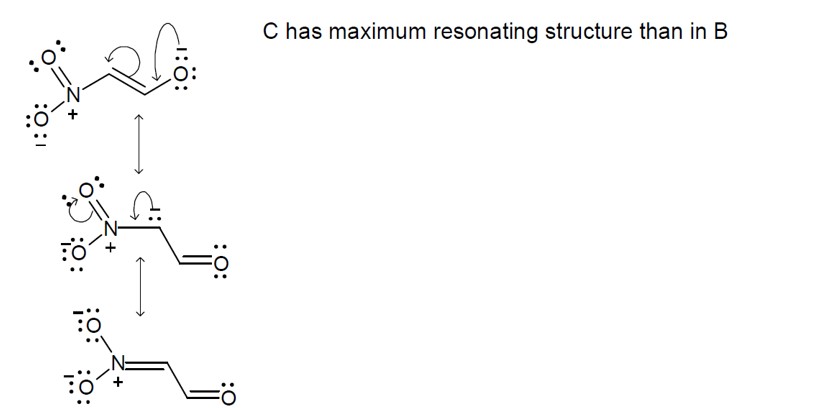
Correct Option - 3
Detailed Solution:
 Upvote
Similar Questions for you
ΔG° = –RT * 2.303 log K
–nFE° = +RT * 2.303 log K
2 * 96500 * 0.295 = 8.314 * 298 * 2.303 log10 K
10 = log10 K = 1010
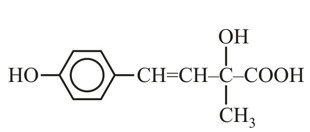
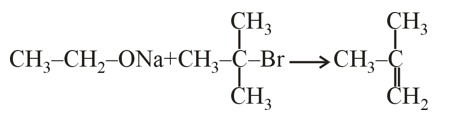
It has chiral centre and differently di substituted double bonded carbon atoms.
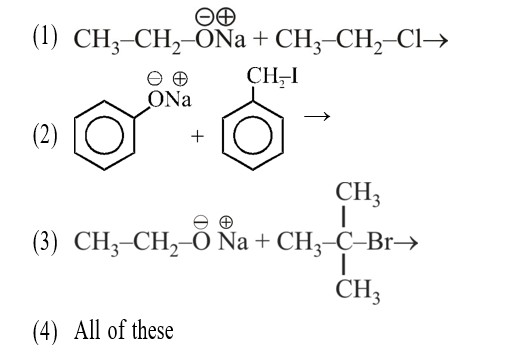
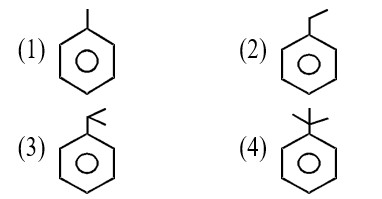
Rate of ESR ∝ No. of α – H (Hyperconjugation)
Cr3+ion is a most stable in aqueous solution due to. t2g half filled configuration
Taking an Exam? Selecting a College?
Get authentic answers from experts, students and alumni that you won't find anywhere else.
On Shiksha, get access to
67K
Colleges
|
1.2K
Exams
|
7.2L
Reviews
|
1.9M
Answers
Learn more about...

Chemistry NCERT Exemplar Solutions Class 11th Chapter Ten 2025
View Exam DetailsMost viewed information
SummaryDidn't find the answer you were looking for?
Search from Shiksha's 1 lakh+ Topics
or
Ask Current Students, Alumni & our Experts
Have a question related to your career & education?
or
See what others like you are asking & answering