
The metal complex that is diamagnetic is (Atomic number; Fe, 26; Cu, 29)
The metal complex that is diamagnetic is (Atomic number; Fe, 26; Cu, 29)
Option 1 - <p><span class="mathml" contenteditable="false"> <math> <mrow> <msub> <mrow> <mi>K</mi> </mrow> <mrow> <mn>3</mn> </mrow> </msub> <mrow> <mo>[</mo> <mrow> <mi>C</mi> <mi>u</mi> <msub> <mrow> <mrow> <mo>(</mo> <mrow> <mi>C</mi> <mi>N</mi> </mrow> <mo>)</mo> </mrow> </mrow> <mrow> <mn>4</mn> </mrow> </msub> </mrow> <mo>]</mo> </mrow> </mrow> </math> </span></p>
Option 2 - <p><span class="mathml" contenteditable="false"> <math> <mrow> <msub> <mrow> <mi>K</mi> </mrow> <mrow> <mn>2</mn> </mrow> </msub> <mrow> <mo>[</mo> <mrow> <mi>C</mi> <mi>u</mi> <msub> <mrow> <mrow> <mo>(</mo> <mrow> <mi>C</mi> <mi>N</mi> </mrow> <mo>)</mo> </mrow> </mrow> <mrow> <mn>4</mn> </mrow> </msub> </mrow> <mo>]</mo> </mrow> </mrow> </math> </span></p>
Option 3 - <p><span class="mathml" contenteditable="false"> <math> <mrow> <msub> <mrow> <mi>K</mi> </mrow> <mrow> <mn>3</mn> </mrow> </msub> <mrow> <mo>[</mo> <mrow> <mi>F</mi> <mi>e</mi> <msub> <mrow> <mrow> <mo>(</mo> <mrow> <mi>C</mi> <mi>N</mi> </mrow> <mo>)</mo> </mrow> </mrow> <mrow> <mn>4</mn> </mrow> </msub> </mrow> <mo>]</mo> </mrow> </mrow> </math> </span></p>
Option 4 - <p><span class="mathml" contenteditable="false"> <math> <mrow> <msub> <mrow> <mi>K</mi> </mrow> <mrow> <mn>4</mn> </mrow> </msub> <mrow> <mo>[</mo> <mrow> <mi>F</mi> <mi>e</mi> <mi>C</mi> <msub> <mrow> <mi>l</mi> </mrow> <mrow> <mn>6</mn> </mrow> </msub> </mrow> <mo>]</mo> </mrow> </mrow> </math> </span></p>
1 Views|Posted a year ago
Asked by Shiksha User
1 Answer
A
Answered by
a year ago
Correct Option - 1
Detailed Solution:
K2 [Cu (CN)4]
Oxidation number of Cu is +1
Cu+ = [Ar]3d10 ® Diamagnetic
 Upvote
Similar Questions for you
ΔG° = –RT * 2.303 log K
–nFE° = +RT * 2.303 log K
2 * 96500 * 0.295 = 8.314 * 298 * 2.303 log10 K
10 = log10 K = 1010
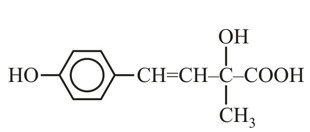
It has chiral centre and differently di substituted double bonded carbon atoms.
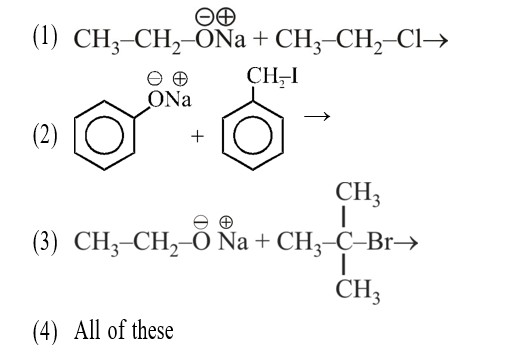
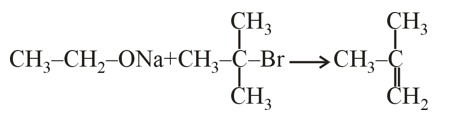
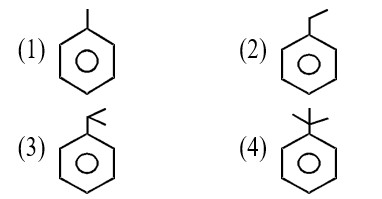
Rate of ESR ∝ No. of α – H (Hyperconjugation)
Cr3+ion is a most stable in aqueous solution due to. t2g half filled configuration
Taking an Exam? Selecting a College?
Get authentic answers from experts, students and alumni that you won't find anywhere else.
On Shiksha, get access to
67K
Colleges
|
1.2K
Exams
|
7.2L
Reviews
|
1.9M
Answers
Learn more about...

Chemistry Coordination Compounds 2025
View Exam DetailsMost viewed information
SummaryDidn't find the answer you were looking for?
Search from Shiksha's 1 lakh+ Topics
or
Ask Current Students, Alumni & our Experts
Have a question related to your career & education?
or
See what others like you are asking & answering