
I. Seven students S1, S2, S3, S4, S5, S6 and S7 take a series of tests.
II. No two students get similar marks.
III. S7 always scores more than S1
IV. S1 always scores more than S2.
V. Each time either S3 scores the highest and S5 gets the least or alternatively S4 scores the S2 and S6 scores the least.
If S3 gets the most, S7 should be ranked not lower than
I. Seven students S1, S2, S3, S4, S5, S6 and S7 take a series of tests.
II. No two students get similar marks.
III. S7 always scores more than S1
IV. S1 always scores more than S2.
V. Each time either S3 scores the highest and S5 gets the least or alternatively S4 scores the S2 and S6 scores the least.
If S3 gets the most, S7 should be ranked not lower than
If S3 gets the most, S5 ranks the lowest and occupies seventh place. Since S7 always ranks above S1 and S2, . so at the maximum, S1 and S2 will occupy fifth and sixth places. Hence, S7 will not rank lower than fourth.
 Upvote
Similar Questions for you
(c) &n
the highest average is Rs. 136
Using the data from above question, the lowest average is Rs. 100.
We get the following table of earnings:
Persons | Win Total | Average |
P | 36 * 150 + 14 * 100 = 6800 | 136 |
Q | 34 * 150 + 21 * 100 = 7200 | 131 |
R | 23 * 150 + 36 * 100 = 6850 | 116 |
S | 30 * 150 + 30 * 100 = 6000 | 100 |
Now we can see that the largest difference
= Maximum – Minimum = Rs. 7500 – Rs. 6800
= Rs. 700
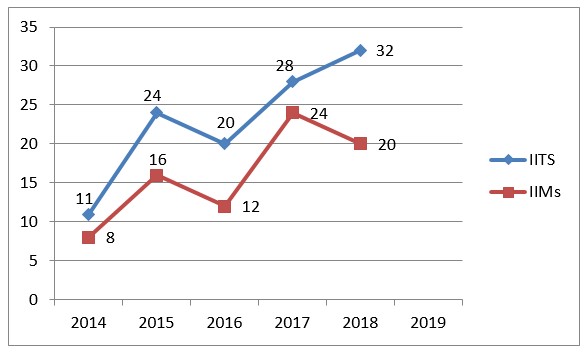
IITs = 60; IIMS = 40
Taking an Exam? Selecting a College?
Get authentic answers from experts, students and alumni that you won't find anywhere else.
On Shiksha, get access to
Learn more about...

DILR Prep Tips for MBA 2026
View Exam DetailsMost viewed information
SummaryDidn't find the answer you were looking for?
Search from Shiksha's 1 lakh+ Topics
Ask Current Students, Alumni & our Experts
Have a question related to your career & education?
See what others like you are asking & answering