
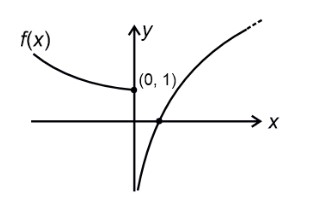
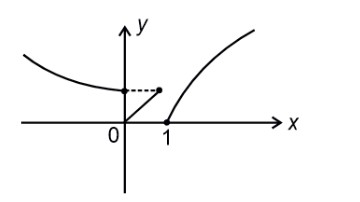
21. Show that the Signum Function f: R → R , given by is neither one-one nor onto.
21. Show that the Signum Function f: R → R , given by is neither one-one nor onto.
The is given by
For
but
So, is not one-one
And the range of hence it is not equal to the co-domain
So, is not onto
 Upvote
Similar Questions for you
R1 = { (1, 1) (1, 2), (1, 3)., (1, 20), (2, 2), (2, 4). (2, 20), (3, 3), (3, 6), . (3, 18),
(4, 4), (4, 8), . (4, 20), (5, 5), (5, 10), (5, 15), (5, 20), (6, 6), (6, 12), (6, 18), (7. 7),
(7, 14), (8, 8), (8, 16), (9, 9), (9, 18), (10, 10), (10, 20), (11, 11), (12, 12)
⇒ (y, x) ∈ R V (x, y) ∈ R
(x, y) ∈ R ⇒ 2x = 3y and (y, x) ∈ R ⇒ 3x = 2y
Which holds only for (0, 0)
Which does not belongs to R.
∴ Value of n = 0
f is increasing function
x < 5x < 7x
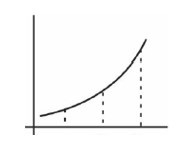
f (x) < f (5x) < f (7x)
->

Given f (k) =
Case I : If x is even then g (x) = x . (i)
Case II : If x is odd then g (x + 1) = x + 1 . (ii)
From (i) & (ii), g (x) = x, when x is even
So total no. of functions = 105 × 1 = 105
Taking an Exam? Selecting a College?
Get authentic answers from experts, students and alumni that you won't find anywhere else.
On Shiksha, get access to
Learn more about...

Maths Relations and Functions 2025
View Exam DetailsMost viewed information
SummaryDidn't find the answer you were looking for?
Search from Shiksha's 1 lakh+ Topics
Ask Current Students, Alumni & our Experts
Have a question related to your career & education?
See what others like you are asking & answering