
21. Three coins are tossed. Describe
(i) Two events which are mutually exclusive.
(ii) Three events which are mutually exclusive and exhaustive.
(iii) Two events, which are not mutually exclusive.
(iv) Two events which are mutually exclusive but not exhaustive.
(v) Three events which are mutually exclusive but not exhaustive.
21. Three coins are tossed. Describe
(i) Two events which are mutually exclusive.
(ii) Three events which are mutually exclusive and exhaustive.
(iii) Two events, which are not mutually exclusive.
(iv) Two events which are mutually exclusive but not exhaustive.
(v) Three events which are mutually exclusive but not exhaustive.
21. The sample space of the experiment is
S = {HHH, HHT, HTH, HTT, THH, THT, TTH, TTT}
(i) Let A and B be two events such that
A: only head occurs
A = {HHH}
B: only tail occurs
B = {TTT}
And A ∩B = {HHH}∩ {TTT} =∅
(ii) Let A, B and C be two events such that
A: at most one head (i.e., the event in which we
 Upvote
Similar Questions for you
3, 4, 5, 5
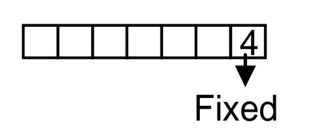
In remaining six places you have to arrange
3, 4, 5,5
So no. of ways
Total no. of seven digits nos. =
Hence Req. prob.
f (x) = x? – 4x + 1 = 0
f' (x) = 4x³ – 4
= 4 (x–1) (x²+1+x)
=> Two solution
Let z be equal to (x + iy)
(x + iy) + (x – iy) = (x + iy)2 (i + 1)
Equating the real & in eg part.
(i) & (ii)
4xy = -2x Þ x = 0 or y =
(for x = 0, y = 0)
For y =
When
gives c = 1
So
sum of all solutions =
Hence k = 42
Each element of ordered pair (i, j) is either present in A or in B.
So, A + B = Sum of all elements of all ordered pairs {i, j} for and
= 20 (1 + 2 + 3 + … + 10) = 1100
Taking an Exam? Selecting a College?
Get authentic answers from experts, students and alumni that you won't find anywhere else.
On Shiksha, get access to
Learn more about...

Didn't find the answer you were looking for?
Search from Shiksha's 1 lakh+ Topics
Ask Current Students, Alumni & our Experts
Have a question related to your career & education?
See what others like you are asking & answering