
43. In a group of 400 people, 250 can speak Hindi and 200 can speak English. How many people can speak both Hindi and English?
43. In a group of 400 people, 250 can speak Hindi and 200 can speak English. How many people can speak both Hindi and English?
43. Let H and E be set if people who speak Hindi and English respectively. there,
n (H) = 250, people speak Hindi n (E) = 200, people speak English
n (H E) = 400, people speaks either Hindi or English
So, n (H E) = n (H) + n (E) n (H E)
= 250 + 200 400
= 50
So, 50 people can speak both Hindi and English
 Upvote
Similar Questions for you
(|x| - 3)|x + 4| = 6
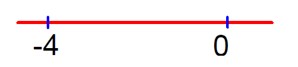
(-x - 3) (- (x + 4) = 6
(x + 3) (x + 4) = 6 ⇒ x² + 7x + 12 = 6 ⇒ x² + 7x + 6 = 0
(x + 1) (x + 6) = 0 ⇒ x = -6 (since x < -4)
Case (ii) -4 ≤ x < 0
(-x - 3) (x + 4) = 6
⇒ -x² - 7x - 12 = 6
⇒ x² + 7x + 18 = 0
The discriminant is D = 7² - 4 (1) (18) = 49 - 72 < 0, so no real solution.
Case (iii) x ≥ 0
(x - 3
Given n = 2x. 3y. 5z . (i)
On solving we get y = 3, z = 2
So, n = 2x. 33. 52
So that no. of odd divisor = (3 + 1) (2 + 1) = 12
Hence no. of divisors including 1 = 12
Let A = {a, b, c}, B = {1, 2, 3, 4, 5} n (A × B) = 15
x = number of one-one functions from A to B.
y = number of one-one functions for A to (A × B)
66. Given series is 1× 2× 3 + 2× 3 ×4 + 3× 4 ×5 + … to n term
an = (nth term of A. P. 1, 2, 3, …) ´× (nth terms of A. P. 2, 3, 4) ×
i e, a = 1, d = 2- 1 = 1i e, a = 2, d = 3- 2 = 1
(nth term of A. P. 3, 4, 5)
i e, a = 3, d = 3 -4 = 1.
= [1 + (n -1) 1] ×[2 + (n -1):1]× [3 + (n- 1) 1]
= (1 + n -1)×(2 + n -1
Taking an Exam? Selecting a College?
Get authentic answers from experts, students and alumni that you won't find anywhere else.
On Shiksha, get access to
Learn more about...

Didn't find the answer you were looking for?
Search from Shiksha's 1 lakh+ Topics
Ask Current Students, Alumni & our Experts
Have a question related to your career & education?
See what others like you are asking & answering