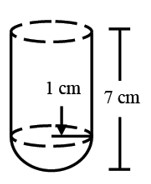
A test-tube consists of a cylinder with a hemispherical base. The diameter of the hemisphere is 2a and the height of the cylinder is b (internal measurements). Three marks are made on the test tube to indicate when the test-tube is half full, one-quarter full and three quarters full. Find the heights of these three marks above the lowest point of the test-tube in order of half full, one quarter full and three quarters full?

Option 1 - <p><span class="mathml" contenteditable="false"> <math> <mrow> <mfrac> <mrow> <mn>2</mn> </mrow> <mrow> <mn>3</mn> </mrow> </mfrac> <mi>a</mi> <mo>+</mo> <mfrac> <mrow> <mi>b</mi> </mrow> <mrow> <mn>2</mn> </mrow> </mfrac> <mo>,</mo> <mtext> </mtext> <mtext> </mtext> <mfrac> <mrow> <mi>a</mi> </mrow> <mrow> <mn>2</mn> </mrow> </mfrac> <mo>+</mo> <mfrac> <mrow> <mi>b</mi> </mrow> <mrow> <mn>4</mn> </mrow> </mfrac> <mo>,</mo> <mtext> </mtext> <mtext> </mtext> <mfrac> <mrow> <mn>5</mn> </mrow> <mrow> <mn>6</mn> </mrow> </mfrac> <mi>a</mi> <mo>+</mo> <mfrac> <mrow> <mn>3</mn> </mrow> <mrow> <mn>4</mn> </mrow> </mfrac> <mi>b</mi> </mrow> </math> </span></p>
Option 2 - <p><span class="mathml" contenteditable="false"> <math> <mrow> <mfrac> <mrow> <mn>1</mn> </mrow> <mrow> <mn>3</mn> </mrow> </mfrac> <mi>a</mi> <mo>+</mo> <mfrac> <mrow> <mi>b</mi> </mrow> <mrow> <mn>2</mn> </mrow> </mfrac> <mo>,</mo> <mtext> </mtext> <mtext> </mtext> <mfrac> <mrow> <mi>a</mi> </mrow> <mrow> <mn>4</mn> </mrow> </mfrac> <mo>+</mo> <mfrac> <mrow> <mi>b</mi> </mrow> <mrow> <mn>2</mn> </mrow> </mfrac> <mo>,</mo> <mtext> </mtext> <mtext> </mtext> <mfrac> <mrow> <mn>5</mn> </mrow> <mrow> <mn>6</mn> </mrow> </mfrac> <mi>a</mi> <mo>+</mo> <mfrac> <mrow> <mn>3</mn> </mrow> <mrow> <mn>4</mn> </mrow> </mfrac> <mi>b</mi> </mrow> </math> </span></p>
Option 3 - <p><span class="mathml" contenteditable="false"> <math> <mrow> <mfrac> <mrow> <mi>a</mi> </mrow> <mrow> <mn>2</mn> </mrow> </mfrac> <mo>+</mo> <mfrac> <mrow> <mi>b</mi> </mrow> <mrow> <mn>2</mn> </mrow> </mfrac> <mo>,</mo> <mtext> </mtext> <mtext> </mtext> <mfrac> <mrow> <mi>a</mi> </mrow> <mrow> <mn>2</mn> </mrow> </mfrac> <mo>+</mo> <mfrac> <mrow> <mi>b</mi> </mrow> <mrow> <mn>4</mn> </mrow> </mfrac> <mo>,</mo> <mtext> </mtext> <mtext> </mtext> <mfrac> <mrow> <mn>5</mn> </mrow> <mrow> <mn>6</mn> </mrow> </mfrac> <mi>a</mi> <mo>+</mo> <mfrac> <mrow> <mn>3</mn> </mrow> <mrow> <mn>4</mn> </mrow> </mfrac> <mi>b</mi> </mrow> </math> </span></p>
Option 4 - <p><span class="mathml" contenteditable="false"> <math> <mrow> <mfrac> <mrow> <mn>3</mn> </mrow> <mrow> <mn>2</mn> </mrow> </mfrac> <mi>a</mi> <mo>+</mo> <mfrac> <mrow> <mi>b</mi> </mrow> <mrow> <mn>2</mn> </mrow> </mfrac> <mo>,</mo> <mtext> </mtext> <mtext> </mtext> <mfrac> <mrow> <mi>a</mi> </mrow> <mrow> <mn>2</mn> </mrow> </mfrac> <mo>+</mo> <mfrac> <mrow> <mi>b</mi> </mrow> <mrow> <mn>4</mn> </mrow> </mfrac> <mo>,</mo> <mtext> </mtext> <mtext> </mtext> <mfrac> <mrow> <mn>5</mn> </mrow> <mrow> <mn>6</mn> </mrow> </mfrac> <mi>a</mi> <mo>+</mo> <mfrac> <mrow> <mn>3</mn> </mrow> <mrow> <mn>4</mn> </mrow> </mfrac> <mi>b</mi> </mrow> </math> </span></p>
2 Views|Posted 7 months ago
Asked by Shiksha User
1 Answer
R
7 months ago
Correct Option - 1
Detailed Solution:

Volume of tube = 2 3 π a 3 + π a 2 b

When it is half-full = 1 3 π a 3 + 1 2 π a 2 b

Volume of Cylinder

= 1 3 π a 3 + 1 2 π a 2 b 2 3 π a 3 = 1 2 π a 2 b 1 3 π a 3

Length in the cylinder

= ( 1 2 π a 2 b 1 3 π a 3 ) ÷ π a 2 = 1 2 b 1 3 a

The height above the lowest point

1 2 b 1 3 a + a = 2 3 a + 1 2 b

When it is 1 4  full, volume = 1 6 π a 3 + 1 4 π a b

Volume of cylinder

= 1 6 π a 3 + 1 4 π a 2 b 2 3 π a 3 = 1 4 π a 2 b 1 2 π a 3

Length in the cylinder

= ( 1 4 π a 2 b 1 2 π a 3 ) ÷ π a 2 = 1 4 b 1 2 a

The height above the lowest point

= 1 4 b 1 2 a + a = 1 2 a + 1 4 b

When it is full, volume 

= 3 4 ( 2 3 π a 3 + π a 2 b ) = 1 2 π a 3 + 3 4 π a 2 b

Volume in cylinder

= 1 2 π a 2 + 3 4 π a 2 b 2 3 π a 3 = 3 4 π a 2 b 1 6 π a 3

Length in the cylinder

= ( 3 4 π a 2 b 1 6 π a 3 ) ÷ π a 2 = 3 4 b 1 6 a

The

...Read more

Thumbs Up IconUpvote Thumbs Down Icon

Similar Questions for you

Total volume = 2800 cubic feet

Area of ceiling = 2800/28 = 100sqfeet

Total time taken = 1000.125 = 800min

= 13hr 20min

Time taken to paint four walls= 40 – 13× 13 = 26hr 40min

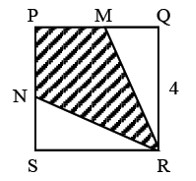
Since M is the midpoint of side PQ, the length of MQ is 2.

Hence, the area of? MQR = 1 2 × 2 × 4 = 4.

Also area of? NSR = 4. Thus, the unshaded area of the figure = 4 + 4 = 8.

Hence, the area of quadrilateral PMRN

= Area of the square PQRS – The unshaded area of the figure

= 16 – 8 = 8

Let the speed of A be x km/hr and speed of B be y km/hr, then:

55x=55y12..... (1)

Also,  55x=51y110..... (2)

On solving both equation (1) & (2) we get x = 11 km/hr and y = 10 km/hr.

...Read more

Taking an Exam? Selecting a College?

Get authentic answers from experts, students and alumni that you won't find anywhere else.

On Shiksha, get access to

66K
Colleges
|
1.2K
Exams
|
6.9L
Reviews
|
1.8M
Answers

Learn more about...

Quantitative Aptitude Prep Tips for MBA 2026

Quantitative Aptitude Prep Tips for MBA 2026

View Exam Details

Most viewed information

Summary

Share Your College Life Experience

Didn't find the answer you were looking for?

Search from Shiksha's 1 lakh+ Topics

or

Ask Current Students, Alumni & our Experts

Have a question related to your career & education?

or

See what others like you are asking & answering