
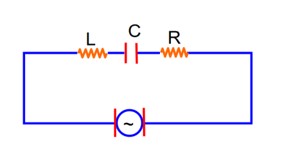
A sinusoidal voltage V(t) = 210 sin3000 t volt is applied to a series LCR circuit in which L = 10 mH, C = 25 and R = The phase difference between the applied voltage and resultant current will be:
A sinusoidal voltage V(t) = 210 sin3000 t volt is applied to a series LCR circuit in which L = 10 mH, C = 25 and R = The phase difference between the applied voltage and resultant current will be:
Option 1 - <p>tan<sup>-1</sup>(0.17)</p>
Option 2 - <p>tan<sup>-1</sup>(9.46)</p>
Option 3 - <p>tan<sup>-1</sup>(0.30)</p>
Option 4 - <p>tan<sup>-1</sup>(13.33)</p>
4 Views|Posted a year ago
Asked by Shiksha User
1 Answer
A
Answered by
a year ago
Correct Option - 1
Detailed Solution:
V = 210 sin 3000 t
= 3000
 Upvote
Similar Questions for you
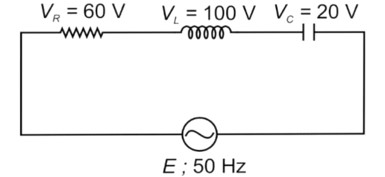
At resonance VL = VC
On increasing XC decreases so Z decreases, current in circuit increases.
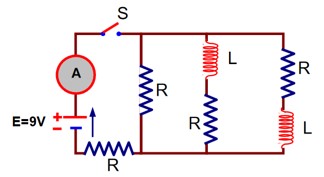
R =
L = 2 mH
E = 9V
Just after the switch ‘S’ is closed, the inductor acts as open circuit.
Taking an Exam? Selecting a College?
Get authentic answers from experts, students and alumni that you won't find anywhere else.
On Shiksha, get access to
67K
Colleges
|
1.2K
Exams
|
7.2L
Reviews
|
1.9M
Answers
Learn more about...

Physics Alternating Current 2025
View Exam DetailsMost viewed information
SummaryDidn't find the answer you were looking for?
Search from Shiksha's 1 lakh+ Topics
or
Ask Current Students, Alumni & our Experts
Have a question related to your career & education?
or
See what others like you are asking & answering