
Statement-I: Two forces when act at an angle θ1 to each other the magnitude of their resultant is when they act an angle θ2, the magnitude of their resultant becomes This is possible only when θ1 < θ2.
Statement-II: In the situation given above.
θ1 = 60° and θ2 = 90°
In the light of the above statements, choose the most appropriate answer from the options given below:-
Statement-I: Two forces when act at an angle θ1 to each other the magnitude of their resultant is when they act an angle θ2, the magnitude of their resultant becomes This is possible only when θ1 < θ2.
Statement-II: In the situation given above.
θ1 = 60° and θ2 = 90°
In the light of the above statements, choose the most appropriate answer from the options given below:-
Option 1 - <p>Both Statement-I and Statement-II are true</p>
Option 2 - <p>Both Statement-I and Statement-II are false</p>
Option 3 - <p>Statement-I is true but Statement-II is false</p>
Option 4 - <p>Statement-I is false but Statement-II is true</p>
8 Views|Posted a year ago
Asked by Shiksha User
1 Answer
V
Answered by
a year ago
Correct Option - 1
Detailed Solution:
=>
=>Using same formula : θ2 = 90°
 Upvote
Similar Questions for you

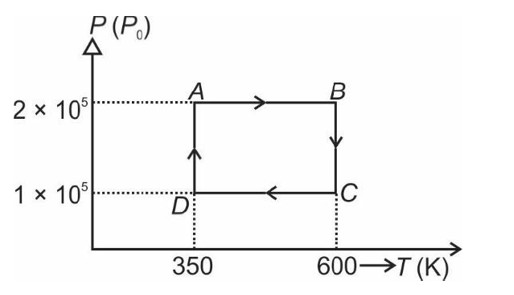
From A to B the process is isobaric
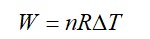
= W = 2 × R (600 - 350)
= 500 R
Taking an Exam? Selecting a College?
Get authentic answers from experts, students and alumni that you won't find anywhere else.
On Shiksha, get access to
67K
Colleges
|
1.2K
Exams
|
7.2L
Reviews
|
1.9M
Answers
Learn more about...

Didn't find the answer you were looking for?
Search from Shiksha's 1 lakh+ Topics
or
Ask Current Students, Alumni & our Experts
Have a question related to your career & education?
or
See what others like you are asking & answering