
Ask & Answer: India's Largest Education Community

All Questions
New Question
9 months ago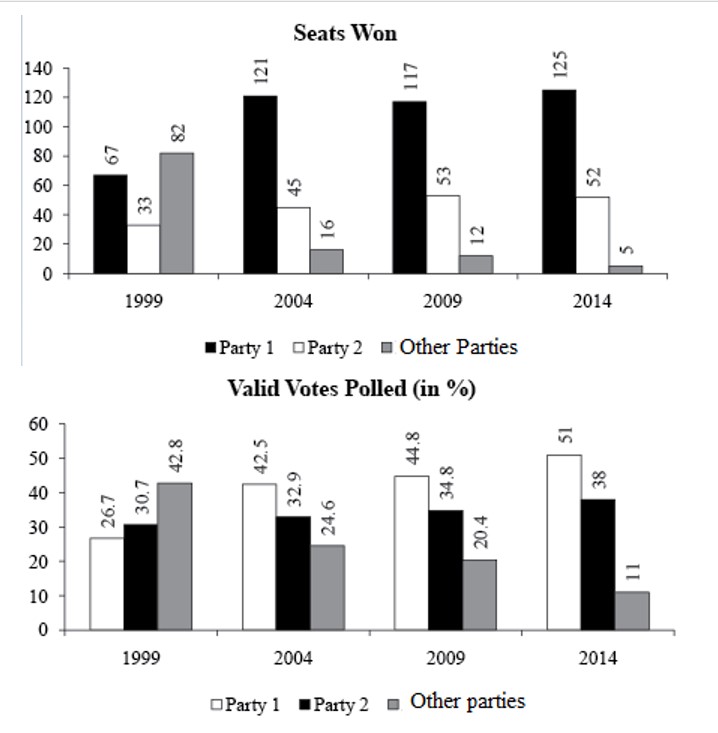
New Question
9 months agoContributor-Level 10
The online or distance learning Public Health programs approved in India are:
Online Courses | Offered by | Course Fees (INR) |
|---|---|---|
IGNOU | 3,000 | |
Imperial Institute of Management | 57,570 | |
The Global Open University | 34,150 | |
Amity University Noida | 3.02 Lakh | |
NSHM Institute of Health Sciences, Durgapur | 2.75 Lakh |
Note: The information has been taken from external sources and may vary.
New Question
9 months agoContributor-Level 10
Of course. Students enrolled in Public Health courses gain knowledge of community outreach, policymaking, and health education—all of which are beneficial in the non-governmental organisation field.
Public health graduates are frequently hired by NGOs and social development organisations for positions in field research, programme management, and awareness campaigns. The course is perfect for people who are enthusiastic about working at the grassroots level and expanding access to healthcare.
New Question
9 months agoContributor-Level 10
You can work with agencies like WHO or UNICEF if you have a degree in Public Health.
They seek applicants with experience in data analysis, epidemiology, health policy, or programme implementation. Your profile is strengthened by relevant project experience, international certifications, and internships. These positions are extremely competitive, but they are reachable with the correct credentials and exposure.
New Question
9 months agoContributor-Level 10
Indeed, Public Health courses at private colleges are typically more expensive than those at government universities.
Private institutions may charge between INR 1 and INR 2.5 Lacs annually, while government colleges charge nominal fees (INR 10,000 to INR 50,000). Private universities, on the other hand, might provide electives, modern facilities, or partnerships with international health and non-governmental organisations.
New Question
9 months agoContributor-Level 10
Mass and temperature are scalars. We can fully describe them by magnitude alone and do not involve direction.
New Question
9 months agoContributor-Level 10
Indeed, Master of Public Health (MPH) and related programs are offered by AIIMS and a few other government colleges.
Reputable Public Health programs are offered by institutions such as AIIMS Delhi, PGIMER Chandigarh, and JIPMER Puducherry. These provide outstanding research and career opportunities in the government or development sector and are frequently more reasonably priced.
New Question
9 months agoContributor-Level 10
The more technical BSc in Public Health programme emphasises data, epidemiology, and health sciences.
However, BPH (Bachelor of Public Health) is more comprehensive and frequently addresses community health, health promotion, and policy. Both provide entry into the field of public health, but BPH is better suited for administrative and community-based positions, while BSc is better suited for roles that focus on research.
New Question
9 months ago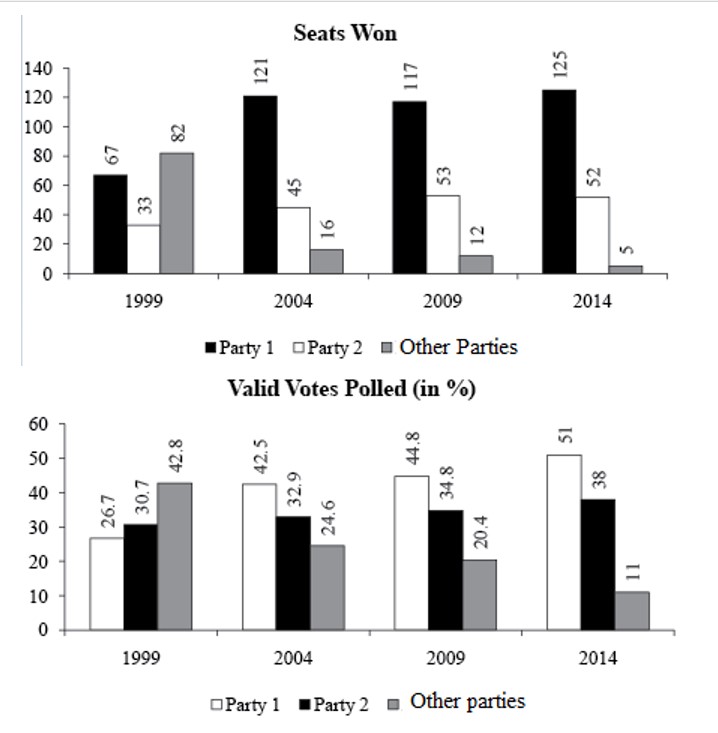
Contributor-Level 10
Total votes in 2009 = (2.24/44.8)*100=5 crore
Total Votes in 1999 = (1.228/30.7)*100= 4 crore
4 cr. is 20% less than 5 cr.
New Question
9 months agoContributor-Level 10
No, Public Health programs in India, such as BPH, BSc Public Health, or MPH do not require NEET.
Most admissions are made based on merit or via entrance exams unique to each university. Only clinical or MBBS-related fields require NEET. For students who wish to work in the healthcare industry without taking the NEET, Public Health is a good choice because of this.
New Question
9 months agoContributor-Level 10
The Master of Public Health (MPH) and diploma-level public health programs are open to applicants with a BCom or BA.
The eligibility requirements of the university may determine admission; some may accept students from any graduation stream, while others favour applicants with backgrounds in science, social science, or health. Public health professionals with a variety of academic backgrounds are valued by NGOs, health policy organisations, and the development sector.
New Question
9 months agoContributor-Level 10
Speed is a scalar quantity. It only has magnitude and no direction, unlike velocity, which is a vector.
New Question
9 months agoContributor-Level 10
No, a background in Science is not always required. Students from any field are welcome to apply to some undergraduate public health programs, particularly those in the arts or business.
However, for some BSc Public Health or MPH programs, a Science background—particularly in biology—may be preferred. Additionally, it can facilitate comprehension of course material such as epidemiology or biostatistics.
New Question
9 months agoContributor-Level 10
Displacement, velocity, and acceleration are common vectors. These three vectors they have both magnitude and direction, and follow vector addition rules.
New Question
9 months agoContributor-Level 10
The data on BSc course tuition fees at Arena Animation Jayanagar is currently unavailable. Visit the official website for more information.
New Question
9 months ago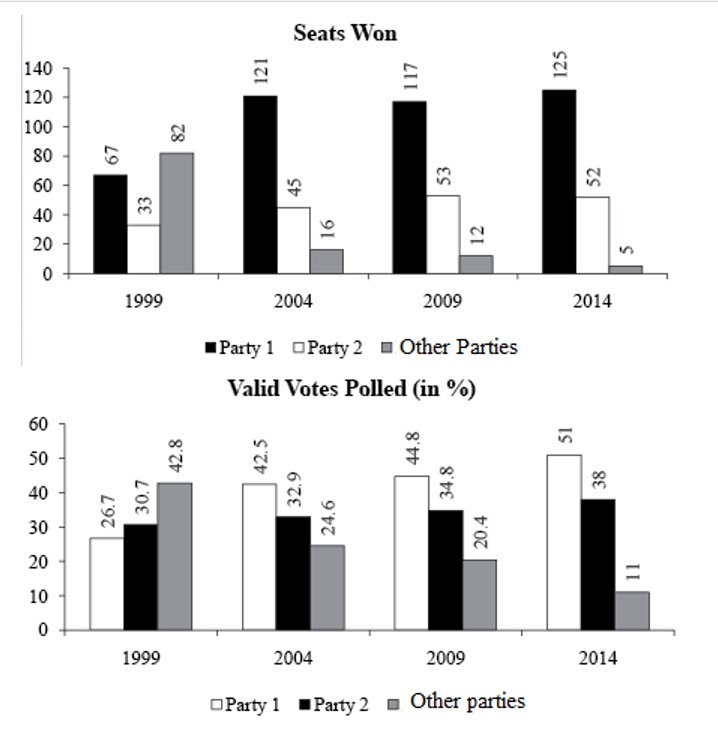
New Question
9 months agoNew Question
9 months agoContributor-Level 10
Graphically, we place vectors head-to-tail. Analytically, we add components along axes using coordinate geometry, trigonometric functions, and unit vectors for precise vector resultant calculation.
New Question
9 months agoContributor-Level 10
Total admission for each course:
Course 2 = 40 + 80 + 95 + 100 + 110 + 130 = 555,
Course 5 = 100 + 140 + 180 + 200 + 250 + 300 = 234,
Course 4 = 14 + 18 + 10 + 6 + 12 + 16 = 1170,
Course 3 = 80 + 120 + 120 + 110 + 150 + 130 = 710.
New Question
9 months agoRegister to get relevant
Questions & Discussions on your feed
Ask & Answer
Panel of Experts