
What is the Centre of Mass and How is it Calculated in NCERT Solutions for Class 11 Physics System of Particles and Rotational Motion?
The centre of mass (COM) of a system refers to the point that represents the average position where the entire mass of the system is considered to be concentrated. The concept helps in analyzing the motion of a system of particles. Following is the formula to determine the COM of two or more particl
 Upvote
Similar Questions for you
Graphics and Motion Graphic, 2d and 3d Character Design, Visual Effects, Game Assets Design, AAFT Animation Offer Bachelors Degree in Animation and Game Design
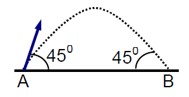
|Δp| = 2mu sinθ = 2 × 5 × 10? ³ × 5√2 × (1/√2) = 5 × 10? ² kg m s? ¹
⇒ x = 5
An example of the periodic motion is Earth's revolution. In this, the motion repeats itself after regular intervals of time. In oscillatory motion, the object moves back and forth about a mean position like a vibrating spring or pendulum. It is a type of periodic motion. Although, oscillatory motion
When without slipping a body rotates and translates simultaneously is called rolling motion, such as a wheel on a road. It is the combination of rotatory and translatory motion. The point of contact has zero velocity relative to the surface in pure rolling. It is a condition in which there is no sli
According to the Class 11 Physics Chapter 6 System of Particles and Rotational Motion, for a rigid body to be in complete equilibrium, two conditions should be met:
- Net external torque = 0 (rotational equilibrium)
- Net external force = 0 (translational equilibrium)
The condition for equilibrium in rotat
Taking an Exam? Selecting a College?
Get authentic answers from experts, students and alumni that you won't find anywhere else.
On Shiksha, get access to
Learn more about...

Didn't find the answer you were looking for?
Search from Shiksha's 1 lakh+ Topics
Ask Current Students, Alumni & our Experts
Have a question related to your career & education?
See what others like you are asking & answering