
13.20 Complete the following reactions:
(i) C6H5NH2 + CH3Cl + KOH →
(ii) C6H5N2Cl + H3PO2 + H2O →
(iii) C6H5NH2 + H2SO4 (conc) →
(iv) C6H5N2Cl + C2H5OH à
(v) C6H5NH2 + Br2 (aq) à
(vi) C6H5NH2 + (CH3CO)2O à
(vii) C6H5N2Cl
13.20 Complete the following reactions:
(i) C6H5NH2 + CH3Cl + KOH →
(ii) C6H5N2Cl + H3PO2 + H2O →
(iii) C6H5NH2 + H2SO4 (conc) →
(iv) C6H5N2Cl + C2H5OH à
(v) C6H5NH2 + Br2 (aq) à
(vi) C6H5NH2 + (CH3CO)2O à
(vii) C6H5N2Cl
1- C6H5NH2 + CHCl3 + KOH
It is a carbylamine reaction in which a isocyanide compound is formed along with side products of potassium chloride.Basically the name of reaction is given is due to formation of a foul smelling compound called as isocyanide.
2- C6H5N2Cl + H3PO2 + H2O
Benzenediazonium chloride
 Upvote
Similar Questions for you
In Amines, the nitrogen atom bonds with alkyl or aryl groups replacing hydrogen, whereas in amides, the nitrogen atom bonds directly with the carbonyl group (-CO-).
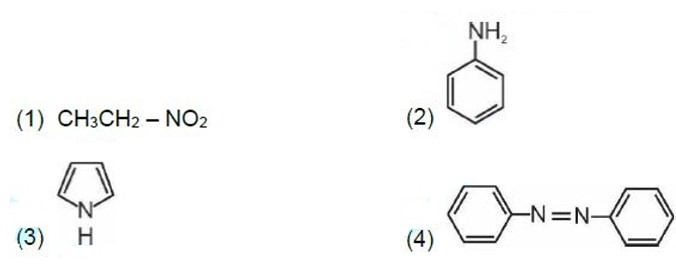
Kjeldahl's method is not applicable to compounds containing nitrogen in nitro and azo groups and nitrogen present in the ring.
Correct order of basic strength in aqueous medium is
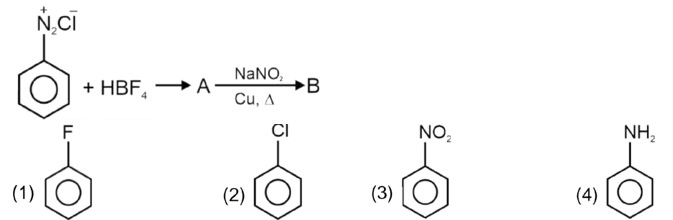
Kindly consider the following figure
Taking an Exam? Selecting a College?
Get authentic answers from experts, students and alumni that you won't find anywhere else.
On Shiksha, get access to
Learn more about...

Didn't find the answer you were looking for?
Search from Shiksha's 1 lakh+ Topics
Ask Current Students, Alumni & our Experts
Have a question related to your career & education?
See what others like you are asking & answering