
At high pressure the following reaction is zero order
2NH3(g) 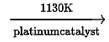 KN2(g) + 3H2(g)
Which of the following options are correct for this reaction?
A. Rate of reaction = Rate constant
B. Rate of the reaction depends on concentration of ammonia.
C. Rate of decomposition of ammonia will remain constant until ammonia disappears completely.
D. Further increase in pressure will change the rate of reaction.
At high pressure the following reaction is zero order
2NH3(g) KN2(g) + 3H2(g)
Which of the following options are correct for this reaction?
A. Rate of reaction = Rate constant
B. Rate of the reaction depends on concentration of ammonia.
C. Rate of decomposition of ammonia will remain constant until ammonia disappears completely.
D. Further increase in pressure will change the rate of reaction.
This is a Multiple Choice Questions as classified in NCERT Exemplar
Correct options: A, C and D
The pressure in this reaction is extremely high, and it becomes independent of the ammonia concentration. The metal surface becomes saturated with gas molecules when the rate of reaction=Rate constant. The
 Upvote
Similar Questions for you
Kindly go through the solution
Ea = 216.164kJ/mol 216
Reaction rate is used to measure how fast or slow reactions occur per unit time. The rate constant is a proportionality factor that remains constant for every reaction.
Yes, in elementary reactions, order and molecularity can be the same, but this is not always the case because order is an experimental quantity, and molecularity is a theoretical concept.
Reaction Kinetics, also known as chemical kinetics, is the study of the rate of chemical reaction and the factors affecting the reaction rate, such as temperature, concentration, and catalyst.
Taking an Exam? Selecting a College?
Get authentic answers from experts, students and alumni that you won't find anywhere else.
On Shiksha, get access to
Learn more about...

Chemistry NCERT Exemplar Solutions Class 12th Chapter Four 2025
View Exam DetailsMost viewed information
SummaryDidn't find the answer you were looking for?
Search from Shiksha's 1 lakh+ Topics
Ask Current Students, Alumni & our Experts
Have a question related to your career & education?
See what others like you are asking & answering