
Gases possess characteristic critical temperature which depends upon the magnitude of intermolecular forces between the particles. Following are the critical temperatures of some gases.
Gases
Critical temperature in Kelvin
H2
33.2
He
5.3
O2
154.3
N2
126
From the above data what would be the order of liquefaction of these gases? Start writing the order from the gas liquefying first
(i) H2, He, O2, N2
(ii) He, O2, H2, N2
(iii) N2, O2, He, H2
(iv) O2, N2, H2, He
Gases possess characteristic critical temperature which depends upon the magnitude of intermolecular forces between the particles. Following are the critical temperatures of some gases.
|
Gases |
Critical temperature in Kelvin |
|
H2 |
33.2 |
|
He |
5.3 |
|
O2 |
154.3 |
|
N2 |
126 |
From the above data what would be the order of liquefaction of these gases? Start writing the order from the gas liquefying first
(i) H2, He, O2, N2
(ii) He, O2, H2, N2
(iii) N2, O2, He, H2
(iv) O2, N2, H2, He
This is a multiple choice answer as classified in NCERT Exemplar
Option (iv) O2, N2, H2, He
Higher the critical temperature of gases more easily, the gas will be liquefied. So, the order of liquefying of gases will be O2 > N2 > H2 >He.
 Upvote
Similar Questions for you
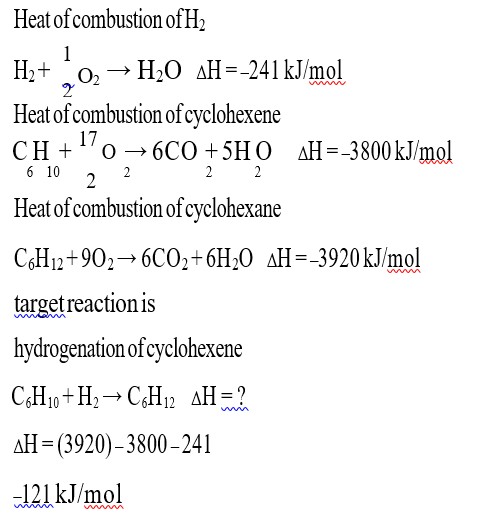
CH3COOH + NaOH → CH3COONa + H2O
ΔH = –50.6 kJ/mol
NaOH + SA [HCl] → NaCl + H2O
ΔH = –55.9 kJ/mol
the value of ΔH for ionisation of CH3COOH
⇒ ΔH = +55.9 – 50.6
5.3 kJ/mol
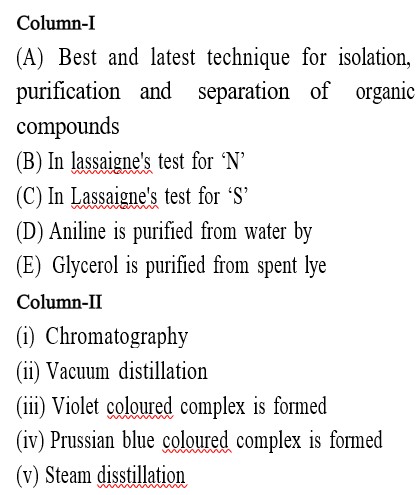
Kindly consider the solution
Fact.
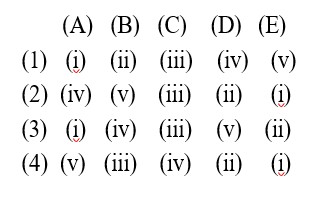
Kindly go through the solution
Taking an Exam? Selecting a College?
Get authentic answers from experts, students and alumni that you won't find anywhere else.
On Shiksha, get access to
Learn more about...

Chemistry NCERT Exemplar Solutions Class 11th Chapter Five 2025
View Exam DetailsMost viewed information
SummaryDidn't find the answer you were looking for?
Search from Shiksha's 1 lakh+ Topics
Ask Current Students, Alumni & our Experts
Have a question related to your career & education?
See what others like you are asking & answering