
Graphically show the total work done in an expansion when the state of an ideal gas is changed reversibly and isothermally from (Pi, Vi) to (Pf, Vf) . With the help of a pV plot compare the work done in the above case with that carried out against a constant external pressure Pf.
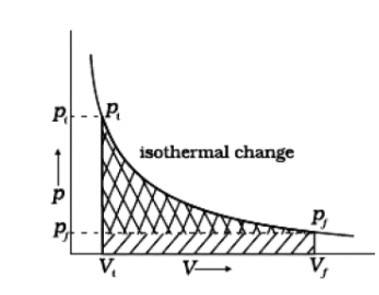
Graphically show the total work done in an expansion when the state of an ideal gas is changed reversibly and isothermally from (Pi, Vi) to (Pf, Vf) . With the help of a pV plot compare the work done in the above case with that carried out against a constant external pressure Pf.

(i) Reversible work is represented by the combined areas
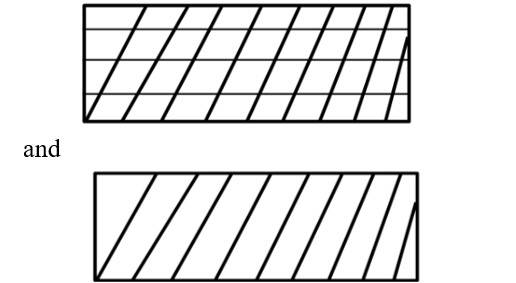
(ii) Work against constant pressure, Pf is represented by the area

Work (i) > Work (ii).
The Approach While Dealing With the Concept of Thermodynamics
Since the concept of Thermodynamics and the terminologies of Chemistry are a bit n Upvote
Similar Questions for you
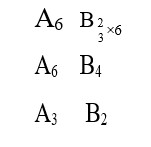
Kindly go through the solution
(1) [Ni (NH3)6]+2 → Ni+2 → d8, C. No. = 6,
SP3d2, Para
(2) [Co (H2O)6]+2 → Co+2 → d6, C. No. = 6
d2sp3, Dia
(3) [Ti (H2O)6]+3 → Ti+3 → d1, C. No. = 6
d2SP3, Para
(4) [Co (NH3)6]+3 → Co+3 → d5, C. No. = 6
d2sp3, Para
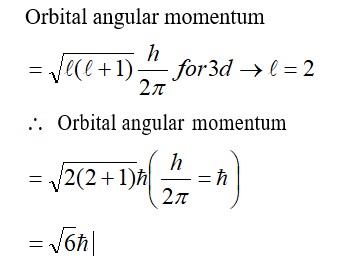
Taking an Exam? Selecting a College?
Get authentic answers from experts, students and alumni that you won't find anywhere else.
On Shiksha, get access to
Learn more about...

Chemistry NCERT Exemplar Solutions Class 11th Chapter Six 2025
View Exam DetailsMost viewed information
SummaryDidn't find the answer you were looking for?
Search from Shiksha's 1 lakh+ Topics
Ask Current Students, Alumni & our Experts
Have a question related to your career & education?
See what others like you are asking & answering