
In the following questions more than one option of column I and II may be correlated.
1. Match the elements given in Column I with the properties mentioned in Column II.
Column I
Column II
(i) Li
(a) Insoluble sulphate
(ii) Na
(b) Strongest monoclinic base
(iii) Ca
(c) Most negative Eo value among alkali metals
(iv) Ba
(d) Insoluble oxalate
(e) 6s2 outer electronic configuration
In the following questions more than one option of column I and II may be correlated.
1. Match the elements given in Column I with the properties mentioned in Column II.
|
Column I |
Column II |
|
(i) Li |
(a) Insoluble sulphate |
|
(ii) Na |
(b) Strongest monoclinic base |
|
(iii) Ca |
(c) Most negative Eo value among alkali metals |
|
(iv) Ba |
(d) Insoluble oxalate |
|
(e) 6s2 outer electronic configuration |
This is a matching type question as classified in NCERT Exemplar
(i) → (c); (ii) → (b); (iii) → (d) : (iv) → (a); (e)
(i) Lithium has the highest negative reduction potential value. Due to the small size of lithium it has a small atomic size, the highest ionization enthalpy Due to this, the reducing
 Upvote
Similar Questions for you

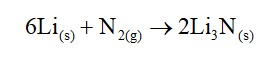
Li+ has the highest hydration enthalpy.
Hence it is most hydrated
Therefore, Correct order of hydrated radii is Cs+ < Rb+ < K+ < Na+ < Li+


Taking an Exam? Selecting a College?
Get authentic answers from experts, students and alumni that you won't find anywhere else.
On Shiksha, get access to
Learn more about...

Chemistry NCERT Exemplar Solutions Class 11th Chapter Ten 2025
View Exam DetailsMost viewed information
SummaryDidn't find the answer you were looking for?
Search from Shiksha's 1 lakh+ Topics
Ask Current Students, Alumni & our Experts
Have a question related to your career & education?
See what others like you are asking & answering