
Match the compounds given in Column I with the effects given in Column II.
Column I
Column II
(i) Chloramphenicol
(a) Malaria
(ii) Thyroxine
(b) Anaesthetic
(iii) Chloroquine
(c) Typhoid fever
(iv) Chloroform
(d) Goiter
(e) Blood substituent
Match the compounds given in Column I with the effects given in Column II.
|
Column I |
Column II |
|
(i) Chloramphenicol |
(a) Malaria |
|
(ii) Thyroxine |
(b) Anaesthetic |
|
(iii) Chloroquine |
(c) Typhoid fever |
|
(iv) Chloroform |
(d) Goiter |
|
(e) Blood substituent |
This is a matching answer type question as classified in NCERT Exemplar
The medicinal uses are linked to the halogen derivatives. Chloramphenicol is an antibiotic used to treat typhoid fever, thyroxine is a hormone whose dysregulation causes goitre, chloroquine is a malaria medication, and chloroform
 Upvote
Similar Questions for you
Photodiode in reverse bias mode is used as intensity measuring device.
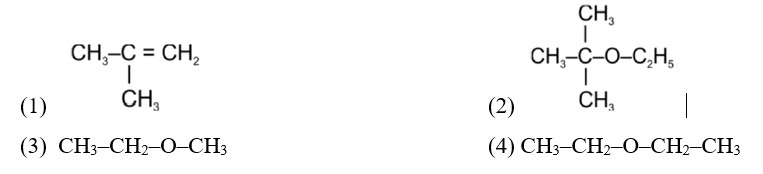
Tertiary haloalkane does not undergo SN2 reaction

Taking an Exam? Selecting a College?
Get authentic answers from experts, students and alumni that you won't find anywhere else.
On Shiksha, get access to
Learn more about...

Chemistry NCERT Exemplar Solutions Class 12th Chapter Ten 2025
View Exam DetailsMost viewed information
SummaryDidn't find the answer you were looking for?
Search from Shiksha's 1 lakh+ Topics
Ask Current Students, Alumni & our Experts
Have a question related to your career & education?
See what others like you are asking & answering