The strength of an aqueous  N a O H solution is most accurately determined by titrating : (Note : consider that an appropriate indicator is used)

Option 1 - <p>Aq. <span class="mathml" contenteditable="false"> <math> <mi mathvariant="normal">N</mi> <mi mathvariant="normal">a</mi> <mi mathvariant="normal">O</mi> <mi mathvariant="normal">H</mi> </math> </span>&nbsp;in a burette and aqueous oxalic acid in a conical flask</p>
Option 2 - <p>Aq. <span class="mathml" contenteditable="false"> <math> <mi mathvariant="normal">N</mi> <mi mathvariant="normal">a</mi> <mi mathvariant="normal">O</mi> <mi mathvariant="normal">H</mi> </math> </span>&nbsp;in a pipette and aqueous oxalic acid in a burette</p>
Option 3 - <p>Aq. <span class="mathml" contenteditable="false"> <math> <mi mathvariant="normal">N</mi> <mi mathvariant="normal">a</mi> <mi mathvariant="normal">O</mi> <mi mathvariant="normal">H</mi> </math> </span> in a volumetric flask and concentrated <span class="mathml" contenteditable="false"> <math> <msub> <mrow> <mrow> <mi mathvariant="normal">H</mi> </mrow> </mrow> <mrow> <mrow> <mn>2</mn> </mrow> </mrow> </msub> <msub> <mrow> <mrow> <mi mathvariant="normal">S</mi> <mi mathvariant="normal">O</mi> </mrow> </mrow> <mrow> <mrow> <mn>4</mn> </mrow> </mrow> </msub> </math> </span>&nbsp;in a conical flask</p>
Option 4 - <p>Aq. <span class="mathml" contenteditable="false"> <math> <mi mathvariant="normal">N</mi> <mi mathvariant="normal">a</mi> <mi mathvariant="normal">O</mi> <mi mathvariant="normal">H</mi> </math> </span> in a burette and concentrated <span class="mathml" contenteditable="false"> <math> <msub> <mrow> <mrow> <mi mathvariant="normal">H</mi> </mrow> </mrow> <mrow> <mrow> <mn>2</mn> </mrow> </mrow> </msub> <msub> <mrow> <mrow> <mi mathvariant="normal">S</mi> <mi mathvariant="normal">O</mi> </mrow> </mrow> <mrow> <mrow> <mn>4</mn> </mrow> </mrow> </msub> </math> </span>&nbsp;in a conical flask&nbsp;&nbsp;&nbsp;&nbsp;&nbsp;</p>
1 Views|Posted 5 months ago
Asked by Shiksha User
1 Answer
R
5 months ago
Correct Option - 1
Detailed Solution:

Aq. N a O H  in a burette and aqueous oxalic acid in a conical flask.

Thumbs Up IconUpvote Thumbs Down Icon

Similar Questions for you

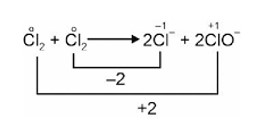
After balancing change in oxidation state,

2Cl2 2Cl + 2ClO

Next, balance 'O' atoms,

2Cl2 +4OH  2Cl + 2ClO+ 2H2O

Simplifying to get the simplest ratios,

Cl2 +2OH Cl+ClO+ H2O

x = 1, y = 2, z = 1, p = 1

...Read more

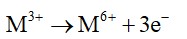
Oxidation no. of a substance is proportional to the charge on it. In this case the charge is + 6 hence oxidation state will be +6


...Read more

Taking an Exam? Selecting a College?

Get authentic answers from experts, students and alumni that you won't find anywhere else.

On Shiksha, get access to

66K
Colleges
|
1.2K
Exams
|
6.9L
Reviews
|
1.8M
Answers

Learn more about...

Chemistry NCERT Exemplar Solutions Class 12th Chapter Eight 2025

Chemistry NCERT Exemplar Solutions Class 12th Chapter Eight 2025

View Exam Details

Most viewed information

Summary

Share Your College Life Experience

Didn't find the answer you were looking for?

Search from Shiksha's 1 lakh+ Topics

or

Ask Current Students, Alumni & our Experts

Have a question related to your career & education?

or

See what others like you are asking & answering