
A square with maximum possible length of the side is inscribed in an equilateral triangle and a circle of maximum possible radius is inscribed in the square. Find the ratio of the length of equilateral of the equilateral triangle to the radius of circle.
A square with maximum possible length of the side is inscribed in an equilateral triangle and a circle of maximum possible radius is inscribed in the square. Find the ratio of the length of equilateral of the equilateral triangle to the radius of circle.
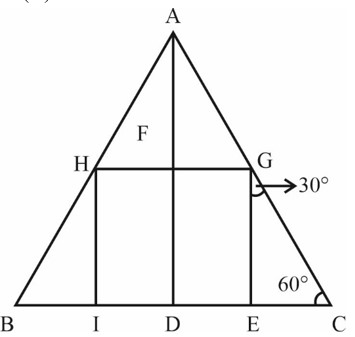
Let the side of = a
CD = a/2
Let EC = x
In GEC
GE/EC = tan60 =
GE = x
DE = a/2 – x = FG = HF
GE = HG
x = a – 2x
x =
GE = x =
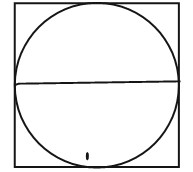
r = side of square ÷ 2
r=
ratio = a/r
=
=
 Upvote
Similar Questions for you
It's difficult but in some colleges you may can get
is collinear with
⇒ = …(1)
is collinear with
⇒ …(2)
From (1) and (2)
->
and
, put sin3x + cos3x = t(3 sin2x×cosx – 3cos2xsinx) dx = dt
->
Taking an Exam? Selecting a College?
Get authentic answers from experts, students and alumni that you won't find anywhere else.
On Shiksha, get access to
Learn more about...

Quantitative Aptitude Prep Tips for MBA 2026
View Exam DetailsMost viewed information
SummaryDidn't find the answer you were looking for?
Search from Shiksha's 1 lakh+ Topics
Ask Current Students, Alumni & our Experts
Have a question related to your career & education?
See what others like you are asking & answering