
A capacitor C is fully charged with voltage V?. After disconnecting the voltage source, it is connected in parallel with another uncharged capacitor of capacitance C/2. The energy loss in the process after the charge is distributed between the two capacitor is:
A capacitor C is fully charged with voltage V?. After disconnecting the voltage source, it is connected in parallel with another uncharged capacitor of capacitance C/2. The energy loss in the process after the charge is distributed between the two capacitor is:
Q? = CV?
U? = ½CV? ²
q? = (q? C)/ (C + C/2) = 2q? /3
q? = (q? (C/2)/ (C + C/2) = q? /3; Uf = q? ²/2C + q? ²/2 (C/2)
= (4q? ²/9x2C) + (q? ²/9C)
= (6q? ²/18C) = q? ²/3C = CV? ²/3
Energy loss in the process = U? – Uf
= ½CV? ² - CV? ²/3
= CV? ²/6
 Upvote
Similar Questions for you
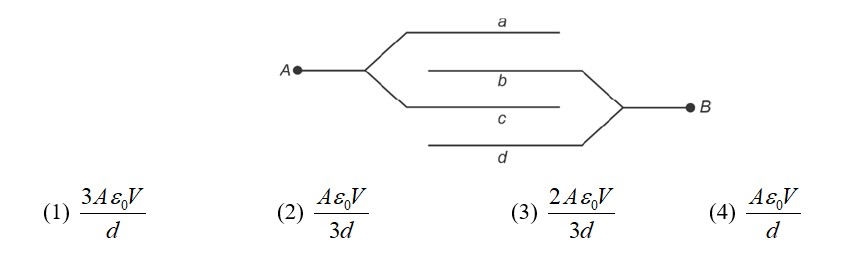
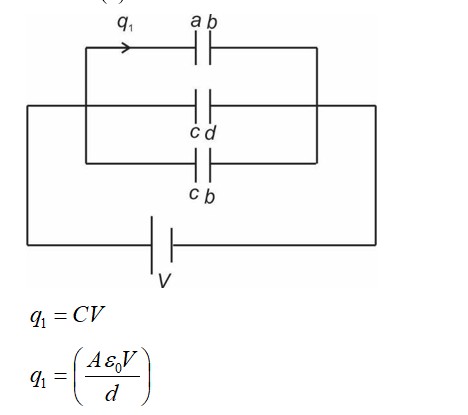
For force between q1 and q2 is maximum, q1 = q2
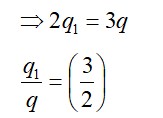
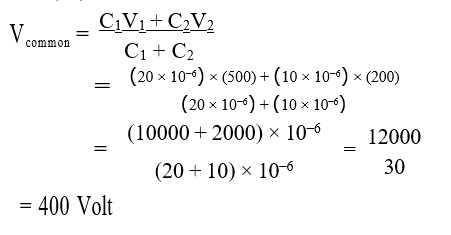
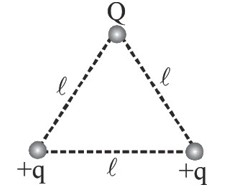
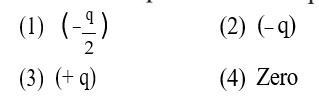
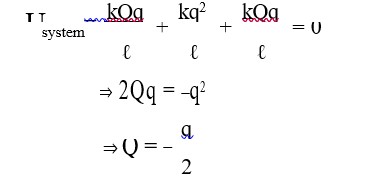
When positive charge moves from low potential to high potential region, work is done against electric field and potential energy increases.
Taking an Exam? Selecting a College?
Get authentic answers from experts, students and alumni that you won't find anywhere else.
On Shiksha, get access to
Learn more about...

Physics Electrostatic Potential and Capacitance 2025
View Exam DetailsMost viewed information
SummaryDidn't find the answer you were looking for?
Search from Shiksha's 1 lakh+ Topics
Ask Current Students, Alumni & our Experts
Have a question related to your career & education?
See what others like you are asking & answering