
A car of mass m starts from rest and acquires a velocity along east v = vȋ (v>0) in two seconds. Assuming the car moves with uniform acceleration, the force exerted on the car is
(a) mv/2 eastward and is exerted by the car engine.
(b) mv/2 eastward and is due to the friction on the tyres exerted by the road.
(c) more than mv/2 eastward exerted due to the engine and overcomes the friction of the road.
(d) mv/2 exerted by the engine .
A car of mass m starts from rest and acquires a velocity along east v = vȋ (v>0) in two seconds. Assuming the car moves with uniform acceleration, the force exerted on the car is
(a) mv/2 eastward and is exerted by the car engine.
(b) mv/2 eastward and is due to the friction on the tyres exerted by the road.
(c) more than mv/2 eastward exerted due to the engine and overcomes the friction of the road.
(d) mv/2 exerted by the engine .
This is a Multiple Choice Questions type Questions as classified in NCERT Exemplar
Answer- b
Explanation – mass of car m =0
Initial velocity =0,
velocity at east direction = v?
Time =2s
So v=u+at,
v? =0+a (2)
so a =v/2?
F=ma = so force = mv/2 towards east.
 Upvote
Similar Questions for you

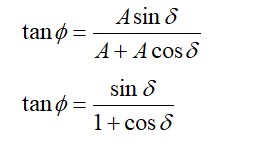
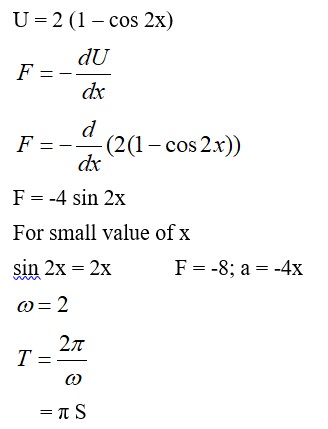
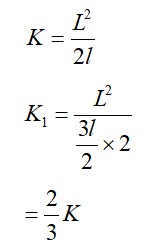
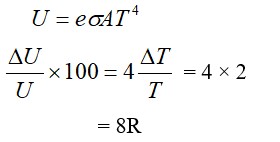
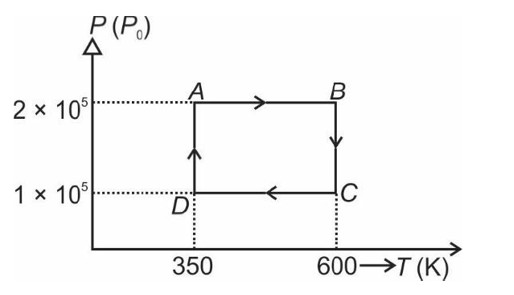
From A to B the process is isobaric
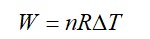
= W = 2 × R (600 - 350)
= 500 R
Taking an Exam? Selecting a College?
Get authentic answers from experts, students and alumni that you won't find anywhere else.
On Shiksha, get access to
Learn more about...

Physics NCERT Exemplar Solutions Class 11th Chapter Five 2025
View Exam DetailsMost viewed information
SummaryDidn't find the answer you were looking for?
Search from Shiksha's 1 lakh+ Topics
Ask Current Students, Alumni & our Experts
Have a question related to your career & education?
See what others like you are asking & answering