
A metallic ring of mass m and radius l (ring being horizontal) is falling under gravity in a region having a magnetic- field. If z is the vertical direction, the z-component of magnetic field is Bz=B0(1+ z). If R is the resistance of the ring and if the ring falls with a velocity v, find the energy lost in the resistance. If the ring has reached a constant velocity, use the conservation of energy to determine v in terms of m, B, and acceleration due to gravity g.
A metallic ring of mass m and radius l (ring being horizontal) is falling under gravity in a region having a magnetic- field. If z is the vertical direction, the z-component of magnetic field is Bz=B0(1+ z). If R is the resistance of the ring and if the ring falls with a velocity v, find the energy lost in the resistance. If the ring has reached a constant velocity, use the conservation of energy to determine v in terms of m, B, and acceleration due to gravity g.
This is a long answer type question as classified in NCERT Exemplar
According to faraday's law e= - and also ohm's law V=IR
So by equating these two
We get Bo( )
I=
And energy lost/second = I2R=
As change in PE=mg but if we compare both energy then
Mgv= or v= 
 Upvote
Similar Questions for you
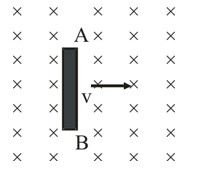
Kindly go through the solution
Bv = B sin 60°
->
M = φ? /I? = (B? A? )/I? = [ (μ? I? /2R? )πR? ²]/I?
[Diagram of two concentric coils]
M = (μ? πR? ²)/ (2R? )
M ∝ R? ²/R?
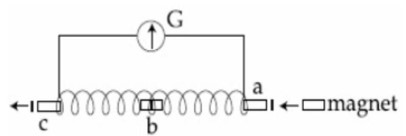
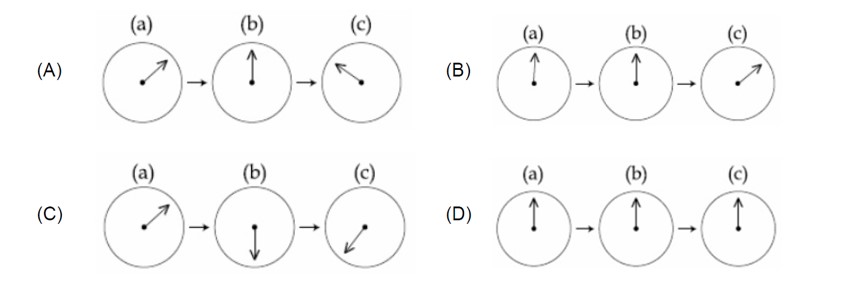
(A) The magnet's entry
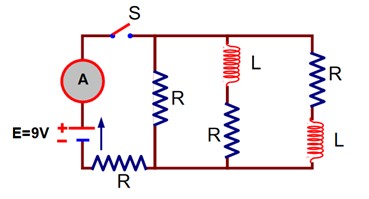
R =
L = 2 mH
E = 9V
Just after the switch ‘S’ is closed, the inductor acts as open circuit.
Taking an Exam? Selecting a College?
Get authentic answers from experts, students and alumni that you won't find anywhere else.
On Shiksha, get access to
Learn more about...

Physics Ncert Solutions Class 12th 2026
View Exam DetailsMost viewed information
SummaryDidn't find the answer you were looking for?
Search from Shiksha's 1 lakh+ Topics
Ask Current Students, Alumni & our Experts
Have a question related to your career & education?
See what others like you are asking & answering