
Moment of inertia of a cylinder of mass M, length L and radius R about an axis passing through its centre and perpendicular to the axis of the cylinder is I = M((R²/4) + (L²/12)). If such a cylinder is to be made for a given mass of a material, the ratio L/R for it to have minimum possible I is
Moment of inertia of a cylinder of mass M, length L and radius R about an axis passing through its centre and perpendicular to the axis of the cylinder is I = M((R²/4) + (L²/12)). If such a cylinder is to be made for a given mass of a material, the ratio L/R for it to have minimum possible I is
The mass of the cylinder M = ρV = ρ (πR²L), where ρ is the density of the material.
We can express R² in terms of L: R² = M / (πρL).
The moment of inertia is I = M (R²/4 + L²/12).
Substitute R² into the equation for I:
I (L) = M * [ (M / (4πρL) + (L²/12) ]
To find the minimum possible I, we differentiate
 Upvote
Similar Questions for you

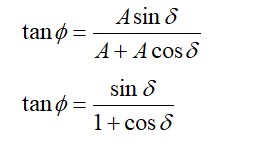
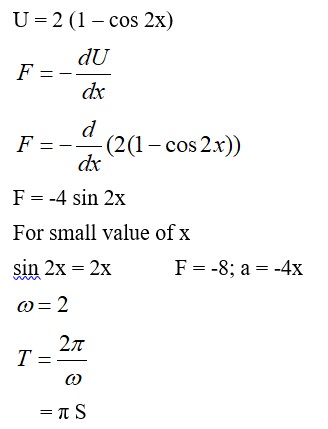
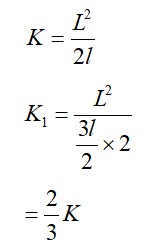
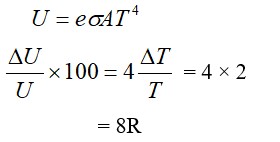
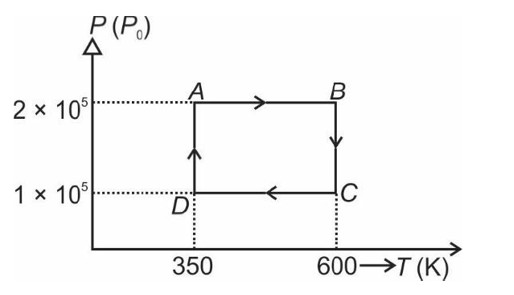
From A to B the process is isobaric
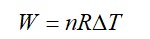
= W = 2 × R (600 - 350)
= 500 R
Taking an Exam? Selecting a College?
Get authentic answers from experts, students and alumni that you won't find anywhere else.
On Shiksha, get access to
Learn more about...

Physics System of Particles and Rotational Motion 2025
View Exam DetailsMost viewed information
SummaryDidn't find the answer you were looking for?
Search from Shiksha's 1 lakh+ Topics
Ask Current Students, Alumni & our Experts
Have a question related to your career & education?
See what others like you are asking & answering