
Three particles P, Q and R are moving along the vectors and respectively. They strike on point and start to move in different directions. Now particle P is moving normal to the plane which contains vector Similarly particle Q is moving normal to the plane which contains vector The angle between the direction of motion of P and Q Then the value of x is_________.
Three particles P, Q and R are moving along the vectors and respectively. They strike on point and start to move in different directions. Now particle P is moving normal to the plane which contains vector Similarly particle Q is moving normal to the plane which contains vector The angle between the direction of motion of P and Q Then the value of x is_________.
Cross product will represent a vector perpendicular to both the vector.
Dir. Of Motion of P :
=
Dir. Of Motion of Q =
 Upvote
Similar Questions for you

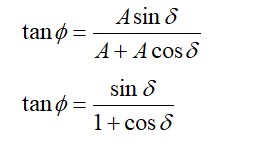
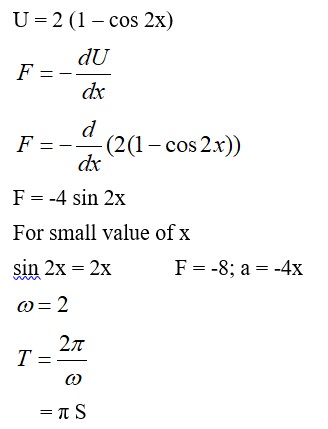
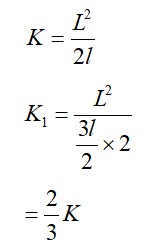
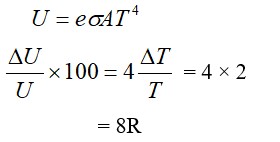
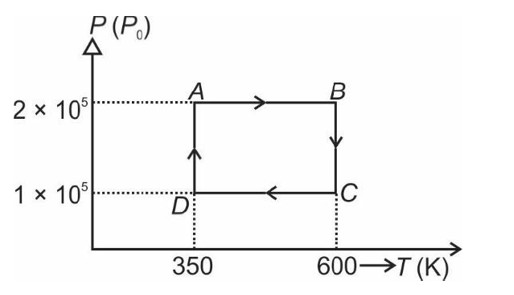
From A to B the process is isobaric
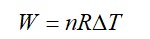
= W = 2 × R (600 - 350)
= 500 R
Taking an Exam? Selecting a College?
Get authentic answers from experts, students and alumni that you won't find anywhere else.
On Shiksha, get access to
Learn more about...

Didn't find the answer you were looking for?
Search from Shiksha's 1 lakh+ Topics
Ask Current Students, Alumni & our Experts
Have a question related to your career & education?
See what others like you are asking & answering