
To raise the temperature of a certain mass of gas by at a constant pressure, 160 calories of heat is required. When the same mass of gas is cooled by at constant volume, 240 calories of heat is released. How many degrees of freedom does each molecule of this gas have (assume gas to be ideal)?
To raise the temperature of a certain mass of gas by at a constant pressure, 160 calories of heat is required. When the same mass of gas is cooled by at constant volume, 240 calories of heat is released. How many degrees of freedom does each molecule of this gas have (assume gas to be ideal)?
Option 1 - <p>7</p>
Option 2 - <p>5</p>
Option 3 - <p>3</p>
Option 4 - <p>6</p>
4 Views|Posted a year ago
Asked by Shiksha User
1 Answer
A
Answered by
a year ago
Correct Option - 4
Detailed Solution:
 Upvote
Similar Questions for you
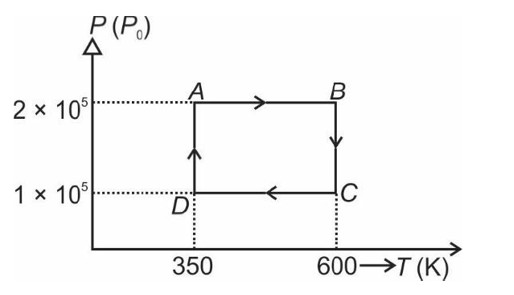
From A to B the process is isobaric

= W = 2 × R (600 - 350)
= 500 R

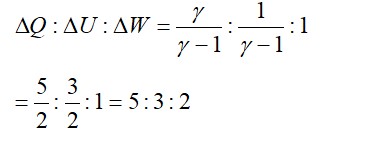
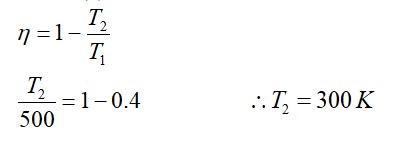

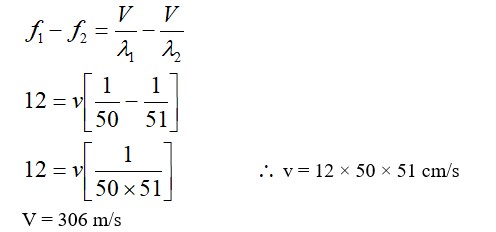
Heat is path dependent so path function but internal energy does not depend on path chosen.
Taking an Exam? Selecting a College?
Get authentic answers from experts, students and alumni that you won't find anywhere else.
On Shiksha, get access to
67K
Colleges
|
1.2K
Exams
|
7.2L
Reviews
|
1.9M
Answers
Learn more about...

Didn't find the answer you were looking for?
Search from Shiksha's 1 lakh+ Topics
or
Ask Current Students, Alumni & our Experts
Have a question related to your career & education?
or
See what others like you are asking & answering