
Ask & Answer: India's Largest Education Community

All Questions
New Question
10 months ago
Contributor-Level 10
Putting we get,
________(1)
Now,
Taking log,
And
Hence eqn (1) becomes
New Question
10 months agoContributor-Level 6
Candidates can check below the methods to make corrections in the CDS application form:
- Visit at upsc.gov.in
- Click on the link available for CDS form correction
- Log in to the registered account using login credentials
- Make corrections to the CDS application correction
- Save and print a copy of the modified CDS application form
- Log out from the registered profile
New Question
10 months agoContributor-Level 10
The Chettinad Academy of Research and Education BSc application process can be completed online on the university's official website. Candidates who are eligible as per the eligibility criteria specified by the university must submit a duly filled application form before the stipulated deadline. The step-wise CARE BSc application process is given below:
Step 1: Visit the official website of CARE (Deemed-to-be University).
Step 2: Click on 'Apply now' on the homepage.
Step 3: On the redirected page, register using a valid mobile number and email ID.
Step 4: Log in using the credentials generated and fill out th
New Question
10 months ago
Contributor-Level 10
So,
_________(1)
Where
(Taking log)
(Differentiation w r t ‘x’)
Hence eqn (1) becomes,
New Question
10 months agoNew Question
10 months agoContributor-Level 10
The University of Bristol is one of the oldest universities in the UK. The university has a rich alumni network all over the world. With more than 190,000 alumni members all over the world. Bristol University alumni network include various famous personalities, entrepreneurs, business professionals, innovators, industry leaders, game changers, and more. Bristol University graduates work for top companies such as Deloitte, NHS, EY, UCL, HSBC, Amazon, Google, JP Morgan, etc. Some notable alumni at University of Bristol are Sarah Jane Brown, Jemima Goldsmith, Alice Roberts, Michael Winterbottom, Mark Francois, Sarah Montague, etc. Further
New Question
10 months agoContributor-Level 10
10. General term of the expansion (1 + x)2n is
Tr+1 = 2nCr (1)2n-r(x)r
So, co-efficient of xn (i.e. r = n) is 2nCn
Similarly general term of the expansion (1 + x)2n–1 is
Tr+1 = 2n-1Cr (1)2n–1–rxr
And co-efficient of xn i.e. when r = n is 2n-1Cn
Therefore,
= 
= ÷
= ×
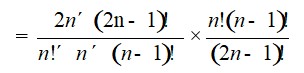
=
= 2
Thus, co-efficient of in = 2x co-efficient of in
New Question
10 months agoContributor-Level 10
The University of Bristol is one of the most-the finest universities for pursuing higher education in the UK. Bristol University has a rich alumni network of more than 190,000 members all over the world. University of Bristol alumni network include business professionals, innovators, leaders, mentors, entrepreneurs, famous personalities, and more. Bristol University graduates work in top sectors such as Business Development, Education, Operations, Engineering, Information Technology, and more. Furthermore, the University of Wisconsin notable alumni are mentioned below:
- Simon Pegg
- Angela Carter
- Letsie III
- Julia Donaldson
- Sarah Kane
- Joe Alwyn
- D
New Question
10 months ago
Contributor-Level 10
Various specialisation opportunities are available for Indian students pursuing MBA in Japan. Some most popular ones are mentioned below:
- Finance
- Marketing
- Information Technology (IT)
- International Business
- Healthcare Management
- Innovation
- Sustainability
- Technology/Science

New Question
10 months agoContributor-Level 10
9. The general term of the expansion (x +1)n is
Tr+1 = nCrxn–r1r
i.e. co-efficient of term = nCr
So, co-efficient of term =nC(r–1) – 1 = nCr – 2
Similarly, co-efficient of rth term = nCr – 1
Given that, nCr – 2 :nCr – 1 : nCr = 1 : 3 : 5
We have,

=
=> × =
=> =
=> =
=> 3r – 3 = n – r + 2
=> 3r + r = n + 2 + 3
=> 4r = n + 5 -------------- (1)
And,

=
=> × =
=> =
=> =
=> 5r = 3n – 3r + 3
=> 5r + 3r = 3n + 3
=> 8r = 3n +
New Question
10 months agoContributor-Level 6
The length of a statement of purpose is dictated by the criteria of the programme and institution. Your purpose statement should be one – two pages long, written in a readable typeface like Times New Roman, with a font size of 11-12 points, depending on the application. Unless the university specifies differently, an SOP of 800-1000 words should suffice.
New Question
10 months agoContributor-Level 10
8. The general term of the expansion (1 + a)m+n is
Tr+1 = m+nCrar [since, 1m+n-r = 1]
At r = m we have,
Tm+1 = m+nCmam
= (a)m
= am - (1)
Similarly at r = n we have,
Tn+1 = m+nCnan
= (a)n
= an - (2)
Hence from (1) & (2),
Co-efficient of am = Co-efficient of an =
New Question
10 months agoContributor-Level 8
According to Shiksha, some of top universities for international students for Japan MBA are mentioned below-
- Kyoto University- #2 in Japan & #94 in world
- Waseda University- #9 in Japan & #325 in world
- Nagoya University- #6 in Japan & #251 in world
- Niigata University- #10 in Japan & #696 in world
New Question
10 months agoContributor-Level 10
The University of Bristol and University of Leeds are some of the top universities in the UK. Both the universities offer high placement rate, top-notch infrastructure, impressive ROI, best degree programs and more for its international students. The University of Bristol placement rate is 93%, and the graduates are employed within 6 months of graduation. This figure indicates that out of 100 students, more than 93 students secured employment. Whereas, University of Leeds placement rate stands at 91%, and the graduates are employed within 6 months of graduation. This figure states that out of 100 students, around 91 students secured em

New Question
10 months agoContributor-Level 10
The University of Bristol and University of Edinburgh are some of the finest universities in the United Kingdom. University of Bristol is located in Bristol, Avon, UK and University of Edinburgh is located in Edinburgh, UK. Each university has its own advantages and demerits. The University of Bristol acceptance rate is around 46%, which makes it somewhat competitive to secure admission. This figure states that out of 100 students, around 46 students are enrolled at the university. Whereas, the University of Edinburgh acceptance rate stands at 51%, which make it extremely competitive to secure admission. This means out of every 100 stu
Register to get relevant
Questions & Discussions on your feed
Ask & Answer
Panel of Experts