
How does LPU tailor its programs to align with the skill sets demanded by emerging industries?
The Lovely Professional University (LPU) is taking an active role to align its programs with the skills requirements of the upcoming industries by maintaining a steady curriculum development and close association with industries. LPU consults with its corporate partners, industry experts, and adviso
 Upvote
LPU tailors its programs to align with the skill sets demanded by emerging industries by regularly updating its curriculum to reflect the latest trends and technologies. The university works closely with industry experts and professionals to ensure that the courses offer relevant knowledge and pract
Upvote LPU's industry-focused curriculum is updated through partnerships, expert feedback, dynamic course content, live projects, guest lectures, and interdisciplinary learning. These strategies ensure the curriculum stays relevant and aligned with industry trends.
Lovely Professional University (LPU) maint
Upvote Greetings!
LPU does tailor its programs to align with the skill sets demanded by emerging industries by the following points:—
1. Industry Collaborations:
- Live projects: Students work on real-world industry projects in collaboration with partner companies, applying theoretical knowledge to address actu
Upvote Hi there!
Lovely Professional University (LPU) tailors its programs to align with the skill sets demanded by emerging industries through a strategic blend of curriculum design, industry collaborations, and hands-on learning. The university continuously updates its syllabus in consultation with indus
Upvote Similar Questions for you
n P (A) = 27 = 128
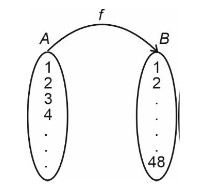
f : A → B
Number of function = 128 × 128….128 = 1287
->mn = 249
m + n = 49 + 2 = 51
n (C) = 16, n (P) = 20, n (M) = 25
n (MÇP) = n (MÇC) = 15, n (PÇC) = 10,
n (MÇCÇP) = x.
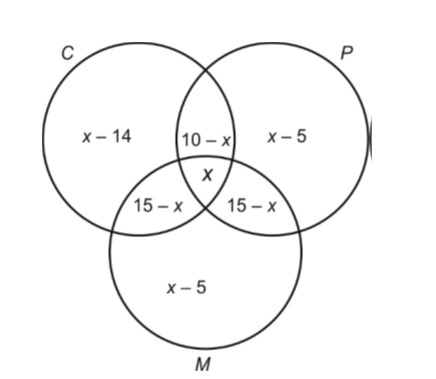
n (CÈPÈM) £ n (U) = 40
n (CÈPÈM) = n (C) + n (P) + n (M) – n (C? M) – n (PÈM) – n (CÇP) + n (CÇPÇM)
40 ³ 16 + 20 + 25 – 15 – 15 – 10 + x
40 ³ 61 – 40 + x
19 ³ x
So maximum number of students that passed a
Let
Let
y = 3 or
or
or –ln3
or
two real values of x
The different types of sets covered in this chapter are - Empty Set, Singleton Set, Finite Set, Infinite Set, Equal Sets, Equivalent Sets, Subset, Proper Subset, Universal Set, Power Set, and Disjoint Sets.
Union (? ) in sets means "or". It gives a set of all unique elements of two or more sets. Intersection (? ) means "and". It includes all the common elements of two or more sets.
Taking an Exam? Selecting a College?
Get authentic answers from experts, students and alumni that you won't find anywhere else.
On Shiksha, get access to
Learn more about...

Most viewed courses
Didn't find the answer you were looking for?
Search from Shiksha's 1 lakh+ Topics
Ask Current Students, Alumni & our Experts
Have a question related to your career & education?
See what others like you are asking & answering