
How is the linear motion different from the motion in a plane?
How is the linear motion different from the motion in a plane?
Linear motion is one-dimensional motion. It refers to motion in a single direction or in a straight line. In linear motion, the object either moves forward or backward along one axis, i.e. x-axis. For example - a ball dropped from a height vertically downward or a car moving straight on a road. Moti
 Upvote
Similar Questions for you

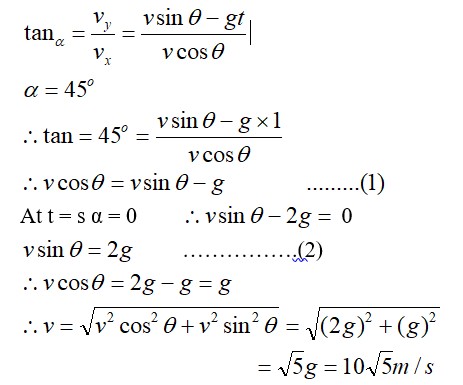
Please find the solution below:
after 10 kicks,
v? = 3tî v? = 24cos 60°î + 24sin 60°? = 12î + 12√3?
v? = v? – v? = (12 – 3t)î + 12√3?
It is minimum when 12 - 3t = 0 ⇒ t = 4sec
ω = θ² + 2θ
α = (ωdω)/dθ = (θ² + 2θ) (2θ + 2)
At θ = 1rad.
ω = 3rad/s and α = 12rad/s²
a? = αR = 12 m/s² a? = ω²R = 9 m/s² A? = √ (a? ² + a? ²) = 15 m/s²
a? = v? ²/4r
a_A? = (v? ²/r²) × r = v? ²/r
a_A = 3v? ²/4r
Taking an Exam? Selecting a College?
Get authentic answers from experts, students and alumni that you won't find anywhere else.
On Shiksha, get access to

Didn't find the answer you were looking for?
Search from Shiksha's 1 lakh+ Topics
Ask Current Students, Alumni & our Experts
Have a question related to your career & education?
See what others like you are asking & answering