
Which one of the following relations is true for two unit vector making an angle to each other?
Which one of the following relations is true for two unit vector making an angle to each other?
Option 1 - <p><span class="mathml" contenteditable="false"> <math> <mrow> <mrow> <mo>|</mo> <mrow> <mover accent="true"> <mi>A</mi> <mo>^</mo> </mover> <mo>+</mo> <mover accent="true"> <mi>B</mi> <mo>^</mo> </mover> </mrow> <mo>|</mo> </mrow> <mo>=</mo> <mrow> <mo>|</mo> <mrow> <mover accent="true"> <mi>A</mi> <mo>^</mo> </mover> <mo>−</mo> <mover accent="true"> <mi>B</mi> <mo>^</mo> </mover> </mrow> <mo>|</mo> </mrow> <mi>t</mi> <mi>a</mi> <mi>n</mi> </mrow> </math> </span>θ<strong>/2</strong></p>
Option 2 - <p><span class="mathml" contenteditable="false"> <math> <mrow> <mrow> <mo>|</mo> <mrow> <mover accent="true"> <mi>A</mi> <mo>^</mo> </mover> <mo>−</mo> <mover accent="true"> <mi>B</mi> <mo>^</mo> </mover> </mrow> <mo>|</mo> </mrow> <mo>=</mo> <mrow> <mo>|</mo> <mrow> <mover accent="true"> <mi>A</mi> <mo>^</mo> </mover> <mo>+</mo> <mover accent="true"> <mi>B</mi> <mo>^</mo> </mover> </mrow> <mo>|</mo> </mrow> <mi>t</mi> <mi>a</mi> <mi>n</mi> </mrow> </math> </span><strong> θ/2</strong></p>
Option 3 - <p><span class="mathml" contenteditable="false"> <math> <mrow> <mrow> <mo>|</mo> <mrow> <mover accent="true"> <mi>A</mi> <mo>^</mo> </mover> <mo>+</mo> <mover accent="true"> <mi>B</mi> <mo>^</mo> </mover> </mrow> <mo>|</mo> </mrow> <mo>=</mo> <mrow> <mo>|</mo> <mrow> <mover accent="true"> <mi>A</mi> <mo>^</mo> </mover> <mo>−</mo> <mover accent="true"> <mi>B</mi> <mo>^</mo> </mover> </mrow> <mo>|</mo> </mrow> <mi>c</mi> <mi>o</mi> <mi>s</mi> </mrow> </math> </span><strong> θ/2</strong></p>
Option 4 - <p><span class="mathml" contenteditable="false"> <math> <mrow> <mrow> <mo>|</mo> <mrow> <mover accent="true"> <mi>A</mi> <mo>^</mo> </mover> <mo>−</mo> <mover accent="true"> <mi>B</mi> <mo>^</mo> </mover> </mrow> <mo>|</mo> </mrow> <mo>=</mo> <mrow> <mo>|</mo> <mrow> <mover accent="true"> <mi>A</mi> <mo>^</mo> </mover> <mo>+</mo> <mover accent="true"> <mi>B</mi> <mo>^</mo> </mover> </mrow> <mo>|</mo> </mrow> <mi>c</mi> <mi>o</mi> <mi>s</mi> </mrow> </math> </span><strong> θ/2</strong></p>
3 Views|Posted a year ago
Asked by Shiksha User
1 Answer
R
Answered by
a year ago
Correct Option - 2
Detailed Solution:
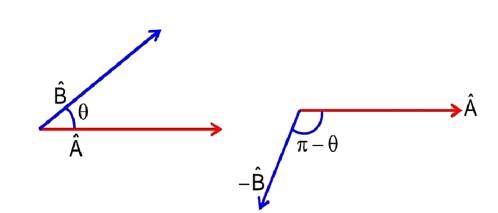
=
-(1)
-(2)
(2) (1)
 Upvote
Similar Questions for you
Mass and temperature are scalars. We can fully describe them by magnitude alone and do not involve direction.
Speed is a scalar quantity. It only has magnitude and no direction, unlike velocity, which is a vector.
Displacement, velocity, and acceleration are common vectors. These three vectors they have both magnitude and direction, and follow vector addition rules.
Taking an Exam? Selecting a College?
Get authentic answers from experts, students and alumni that you won't find anywhere else.
On Shiksha, get access to
67K
Colleges
|
1.2K
Exams
|
7.2L
Reviews
|
1.9M
Answers
Learn more about...

Physics Motion in Plane 2025
View Exam DetailsMost viewed information
SummaryDidn't find the answer you were looking for?
Search from Shiksha's 1 lakh+ Topics
or
Ask Current Students, Alumni & our Experts
Have a question related to your career & education?
or
See what others like you are asking & answering