
Ask & Answer: India's Largest Education Community

All Questions
New Question
6 months agoNew Question
6 months ago
Beginner-Level 5
This is how they learn about real life in the industry. They learn from experience rather than by reading. The university has some kind of contact with companies, and these students do tasks of a small scale. It gives a taste of working on real animation work. Teachers motivate the students and also give them tips based on their own experiences. Students get to try various tools and techniques while working on these projects. Thus, it prepares them fast for getting jobs after the course. So yes, live projects are part of learning, and students get hands-on experience with practical knowledge that will help with future animation works.
New Question
6 months agoNew Question
6 months agoBeginner-Level 4
This university is different when it comes to practical hands-on experience. Such practicals are organized by the presence of a community radio station running on FM through which students can enhance their hosting skills. Then again, there is such a sophisticated TV studio with PCR on campus where broadcast training is imparted. More than all that, they perform media stuff through their digital hub on the campus channel while creating newsletters and magazines. All this also keeps the students active through field visits and outdoor activities. During the last phase, students go for mandatory internships in industries and spend months
New Question
6 months agoBeginner-Level 2
UIMS at Chandigarh University has best industry connections with great numbers of media partnerships for placements and internships including top companies such as Aaj Tak and NDTV. This gets further strengthened by industry-centric learning such as live projects, educational tours to places like Red-FM, and specialised labs framed close to media production environments in reality. Conclaves also include industry leaders, writing history for the Media Innovation Programmes that connect students with real-time opportunities and boost their careers.
New Question
6 months agoNew Question
6 months agoContributor-Level 10
Reflection is the concept of bouncing back of light waves when passed through a surface. Whereas, diffraction is a term used when light waves spread in different directions on being passed through an obstacle. Reflection requires a smooth surface whereas diffraction requires the edge of an object.
New Question
6 months agoContributor-Level 10
Interference is a concept that forms the base of diffraction, without which diffraction is not practically possible. The waves formed by diffraction form secondary waves which either cross each other, move in directions opposite to each other, or overlap each other. This situation creates some alternating bright and dark fringes called interference.
New Question
6 months ago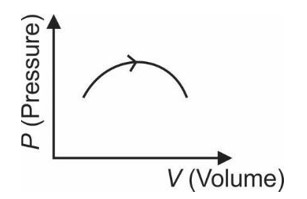
Contributor-Level 10
During the process, area under P – V graph continuously increases but rate of increment varies.
New Question
6 months agoContributor-Level 10
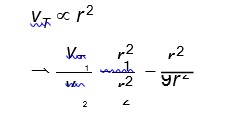
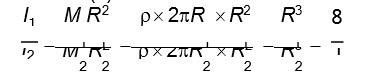
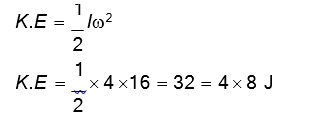
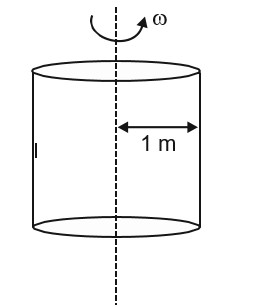
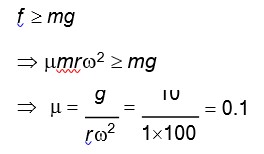
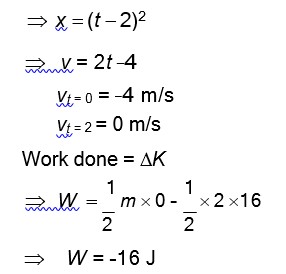
In rotational motion, angular velocity of every particle on rigid body will be same. But linear velocity is given as v = r ? .
New Question
6 months agoContributor-Level 10
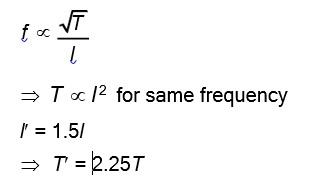
As per Newton third law, the horse exerts a force on the ground, the ground will also exert a force on the horse.
New Question
6 months agoContributor-Level 10
For admission to the Certificate course at Global Elite Fashion Management and Media TV, students need to fulfil the minimum eligibility criteria in the first place. The selection criteria for this course are merit-based, and candidates must pass Class 10.
New Question
6 months agoContributor-Level 10
Nice Question! In this case, the matter wouldn't even exist. Atoms will exhibit non-uniform energy levels and can easily jump between different orbitals, leading to instability in the energies. This will lead to an unstable spectra and anything would, ;t exist today in the way we know it to be.
Register to get relevant
Questions & Discussions on your feed
Ask & Answer
Panel of Experts